

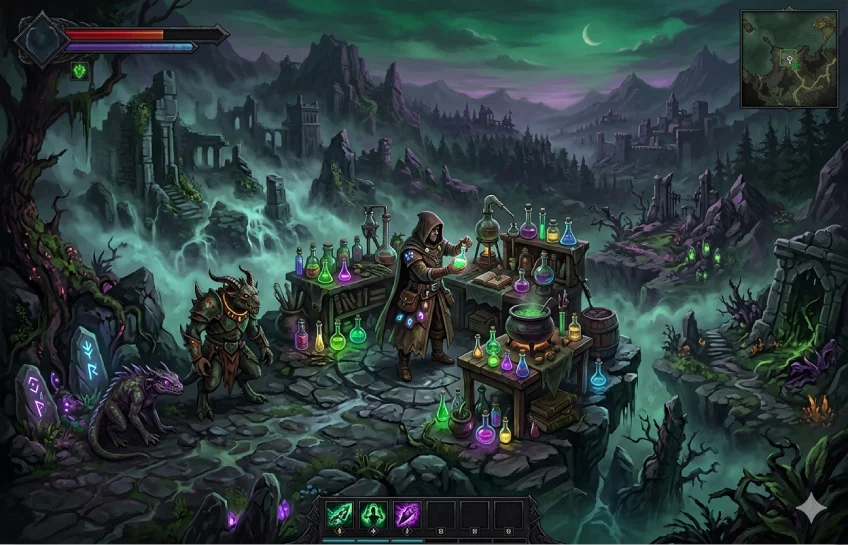
Getting a competitive edge in The Serpent Rogue isn’t about being good at combat. The game doesn’t reward aggression — it rewards preparation, patience, and understanding how its systems connect. You show up, start gathering ingredients, try to figure out what you’re supposed to do — and then a corruption storm wipes out half your progress. It feels unfair at first. But once those systems click, everything changes.
This guide breaks down what that advantage actually looks like, and how you can start building it from the beginning.
What “Competitive Edge” Even Means Here
This isn’t a PvP game. There’s no leaderboard. So “competitive edge” here means something specific: it’s the gap between players who struggle through the game and players who thrive in it.
That gap comes down to three things — and they’re what separate players who grind through The Serpent Rogue from those who build a real competitive edge: knowing your alchemy, controlling corruption before it controls you, and making decisions that compound over time. Players who ignore any one of those three hit walls constantly. Players who respect all three start feeling like they’re ahead of the game rather than behind it.
Alchemy Is the Real Engine
Most beginners treat alchemy like a side activity. They’ll craft a potion here and there, mostly because the game nudges them to. But alchemy is the core of everything. It determines how well you fight, how long you can explore, whether your followers survive, and how fast you move through dangerous zones.
The key shift in thinking: stop treating potions as emergency items. Advanced players craft before they need to. They head into an area with a full inventory of relevant concoctions rather than hoping they’ll find what they need mid-run.
Experimentation is how you build an advantage here. The game doesn’t hand you a recipe book — you figure things out by combining ingredients and tracking what works. Keep notes outside the game if you have to. When you find a combination that produces a useful effect, you want to replicate it reliably. That knowledge is your edge, and players who skip experimentation don’t have it.
A few practical things to focus on early: prioritize gathering ingredients before exploring new areas. If you enter a biome without relevant crafting materials, you’re flying blind. Find out which creatures and plants appear in a zone, and prepare for what that zone demands before stepping in.
Don’t overlook food items either. They seem basic, but some provide buffs that stack with your potions. Treating your entire inventory as a system — not just a potion list — makes a real difference.
Corruption Will Beat You If You Let It
Corruption is The Serpent Rogue’s main pressure mechanic. Leave it unchecked and it spreads across the map, turning safe areas dangerous and eventually making certain zones unplayable until you deal with it. A lot of players die repeatedly not because they’re bad at combat, but because corruption has quietly stacked up against them.
The mistake most beginners make is treating corruption as a problem to deal with later. It isn’t. It’s a resource management problem that needs ongoing attention from the start.
Pay attention to what triggers corruption increases. Leaving dead enemies on the ground, dying, spending too long in certain areas — these all push the meter up. Cleaning up your environment (burying bodies, using purification methods the game provides) keeps that pressure manageable.
Get your corruption-countering items ready before entering high-risk areas, not during them. Players who manage corruption well aren’t just reactively purifying after problems appear — they’re running lean, cleaning up behind themselves, and entering dangerous zones prepared.
Combat Without a Safety Net
Combat in The Serpent Rogue is punishing because the game runs on real consequences. If you get careless in a fight, you die — and dying has downstream effects. It’s not a game that lets you brute-force your way through encounters.
The best combat tactic is also the least glamorous: avoid unnecessary fights. Every fight carries risk. If you can walk past something, walk past it. Save your resources for encounters you can’t avoid.
When you do fight, preparation matters more than skill. The right potion before a tough enemy is worth more than perfect execution without one. Creature-specific weaknesses exist in this game — players who test and learn those early move through combat encounters much faster.
Tamed creatures change the math significantly. Having a strong companion handle some of the combat burden lets you manage resources and positioning instead of just surviving. Prioritize taming early. It pays off longer than almost any other investment you can make.
Resource Loops That Actually Work
The Serpent Rogue punishes poor inventory management constantly. You run out of key ingredients at the wrong time, or you’re carrying so much low-value material that you can’t pick up what actually matters.
Here’s a system that works: designate each trip outside your base around a specific resource goal. Don’t just wander and pick up whatever you see. Know what you need before you leave — whether that’s crafting ingredients, creature-related items, or exploration of a particular zone. Focused runs are more efficient and waste far less time.
Keep your storage organized by type. In practice, a lot of players end up with a cluttered inventory where they can’t quickly assess what they have. When you’re in the middle of a tense situation, grabbing what you need fast matters more than you’d think.
Consumables should be restocked after every major run, not when they run out. The moment you realize you’re out of a key potion mid-run is already too late. Make restocking part of your base routine before leaving, every time.
The Decisions That Compound
The Serpent Rogue rewards players who think a few steps ahead. Every decision has downstream effects. Killing a creature you could have tamed, using rare ingredients on a basic potion, letting corruption spread because you didn’t feel like dealing with it — these small choices stack fast.
Players who get the most out of this game tend to ask “what does this cost me later?” before acting. That includes route choices, combat choices, and especially resource choices. Rare ingredients should be saved until you understand their best use, not spent on the first recipe that comes up.
Exploration is also a compounding investment. The more of the map you understand, the better your resource routes become. Early exploration, even when it’s slow, pays off in the mid-game when you need specific ingredients from specific zones.
Common Traps That Hold Players Back
Ignoring the environment: The world reacts to what you do. Letting bodies pile up, leaving areas messy, rushing through zones — the game punishes carelessness in ways that compound quickly.
Over-relying on combat: The game gives you alchemy, taming, and avoidance for a reason. Players who try to fight everything run out of resources fast.
Crafting without a plan: Making random potions because you have leftover ingredients isn’t strategy. Know what you need and craft toward that goal.
Waiting too long to tame: Creature companions are strong. Players who delay taming because it seems complicated miss out on one of the game’s best advantages.
A Simple Routine That Works
Before each session or major run:
Check your corruption level and deal with it if it’s rising. Restock your key potions and consumables. Identify one or two specific resource goals for the run. Confirm your companions are ready. Know which zone you’re heading into and what threats it holds.
After each run: clean up, store resources by type, note any new alchemy discoveries, and assess whether your base setup still fits your current progression stage.
That routine is, practically speaking, the simplest path to a consistent competitive edge in The Serpent Rogue — not a single trick, but a repeatable system that keeps you ahead instead of catching up.
FAQs
What’s the best thing to focus on first in The Serpent Rogue? Alchemy and corruption management. Getting comfortable with crafting early and keeping corruption controlled prevents most of the frustration that sinks new players.
How do I stop running out of ingredients mid-run? Plan your runs around specific resource goals rather than exploring randomly. Know what you need before you leave, and restock after every major outing.
Is combat avoidance actually a valid strategy? Yes. The game is built around consequence and resource management. Fighting everything burns through your supplies and creates unnecessary risk. Avoid what you can.
How important are tamed creatures? Very. They take pressure off you in combat, letting you focus on positioning and resource use. Tame early and invest in strong companions as soon as possible.
Does corruption ever go away on its own? No. It requires active management. If you leave it alone, it spreads and makes your life significantly harder. Stay ahead of it from the start.
The players who thrive in The Serpent Rogue aren’t necessarily the best fighters. They’re the ones who understand how the systems connect — alchemy feeding into combat, corruption feeding into exploration, resource management feeding into long-term progress. Get those three things working together and the game opens up in a way that early frustration doesn’t hint at. Start with the basics, stay consistent, and experiment. That’s where the real advantage lives.

Other Articles

Home Improvement for Beginners: Tools, Tips & Easy Projects
Bitcoin Price Prediction 2026: What the Data Says

No Comment! Be the first one.