

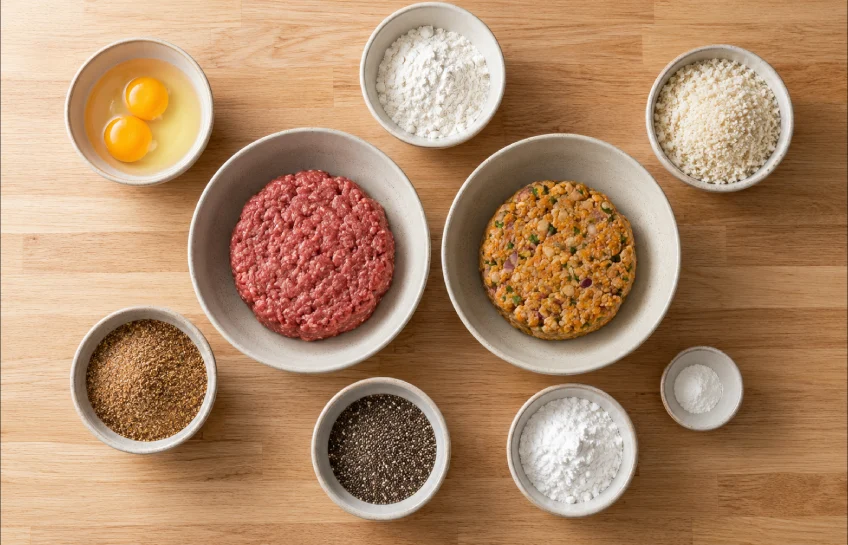
If you’ve ever watched a burger fall apart on the grill or a veggie patty crumble the second it hits the pan, you’ve already felt the problem that binders exist to solve. A binder is the ingredient doing the quiet structural work in a recipe — the thing that holds everything together so your food actually behaves the way you expect it to.
This guide covers what a binder is, how it works in meat dishes, baking, and gluten-free cooking, which ingredients qualify, and how to pick or swap the right one. Think of it as the explanation that should have been in the recipe all along.
What Is a Binder in Cooking?
A binder — also called a binding agent or food binder — is any ingredient you add to a recipe to help other components stick together, hold their shape, and often retain moisture during cooking.
You’ll find binders in everything from classic meatloaf and burgers to cakes, falafel, gluten-free bread, and panna cotta. The ingredient itself might be something as familiar as an egg or as specific as xanthan gum, but the job is the same: create structure where there otherwise wouldn’t be any.
What Does a Binder Actually Do?
At the most basic level, a binder does three things:
- Holds loose ingredients together so they don’t crumble when you cut, flip, or pick them up.
- Improves texture so the final dish feels cohesive rather than dry or grainy.
- Helps retain moisture during cooking, which matters a lot in ground meat and baked goods.
On a more technical level, binders form a structured network that traps proteins, starch granules, fat droplets, and seasonings in a cohesive matrix. Depending on the ingredient, that involves protein coagulation (eggs setting with heat), starch gelatinization (flour and potato starch thickening), or hydrocolloid gel formation (gums like xanthan and guar). According to Wikipedia’s overview of hydrocolloids, these gel-forming substances are widely used in both home kitchens and commercial food production to control texture and structure.
Where You’re Already Using Binders Without Realising
Most cooks are already relying on binders constantly — they just don’t always name them as such:
- Cracking eggs into meatballs or meatloaf
- Adding flour to cake batter
- Stirring breadcrumbs or oats into a burger mix
- Using gelatin in jellies and panna cotta
The concept isn’t exotic. It’s already in your cooking.
Binder vs Thickener vs Emulsifier — What’s the Difference?
These three terms overlap, but they’re not interchangeable.
Binders hold a structure together — think burgers, patties, and cakes. Thickeners increase viscosity in liquids like soups, sauces, and gravies. Emulsifiers help oil and water combine — egg yolk in mayonnaise being the classic example.
Some ingredients, particularly starches and gums, can do more than one job depending on how you use them. Cornstarch thickens a sauce but also contributes structure in certain batters. Xanthan gum binds gluten-free doughs but also stabilises sauces. The distinction is about function, not ingredient identity.
Why Binders Matter in Everyday Cooking
You really notice the difference a binder makes when it’s absent. The dish might taste fine, but the texture gives it away immediately.
Shape and Structure
A good binder is what allows a burger to survive being flipped, a falafel ball to hold together in hot oil, and a meatloaf to slice cleanly rather than fall apart. Without it, you’re fighting physics every time you try to serve something.
This is especially obvious in plant-based cooking. Veggie patties made from beans, lentils, or chickpeas have almost no natural cohesion — they’re basically a pile of cooked legumes. The binder is what turns that pile into something that actually stays together in the pan.
Moisture and Juiciness
Many binders also trap water or fat, which keeps meat dishes juicy and baked goods tender rather than chalky. Oatmeal or breadcrumbs in meatballs, for example, absorb juices released during cooking and hold them inside the structure. The result is a finished texture that’s moist rather than squeezed-dry.
Texture and Mouthfeel
A good binder contributes directly to how food feels when you eat it — the even crumb in a cake, the chew in a cookie, the bite of a burger that doesn’t feel like cardboard. This is why binders are central to gluten-free baking, where the challenge is rebuilding structure without the gluten network that wheat naturally provides.
Types of Binders in Cooking
Binders fall into several ingredient categories: protein-based, starch-based, fat and dairy-based, gums and fibers, seeds and crumbs, and gel-forming agents. Here’s a practical breakdown.
Common Binder Categories
| Binder Family | Typical Ingredients | Common Uses |
|---|---|---|
| Protein-based | Eggs, egg whites, egg yolks, soy protein, pea protein | Cakes, custards, meatloaf, burgers, vegan meats |
| Starch & flour-based | Wheat flour, rice flour, potato starch, tapioca, cornstarch | Breads, cakes, batters, gluten-free baking |
| Fat & dairy-based | Milk, evaporated milk, cheese, cream, mayonnaise | Meat mixtures, casseroles, some sauces |
| Gums & fibers | Xanthan gum, guar gum, psyllium husk, methylcellulose | Gluten-free breads, plant-based meats |
| Seeds & crumbs | Ground flax, chia, breadcrumbs, crackers, oats | Meatballs, veggie patties, coatings |
| Gelatin & gel-like | Gelatin, agar-agar, pectin | Jellies, panna cotta, mousses |
Animal-Based vs Plant-Based Binders
Animal-based binders — eggs, dairy, gelatin — are the standard in classic baking, custards, and traditional meat dishes. They’re reliable and familiar, and most recipes assume them by default.
Plant-based binders — flours, starches, seeds, gums, fibers, pectin, agar-agar — are essential for vegan, vegetarian, and egg-free cooking. You can usually swap between these groups, but you’ll often need to adjust quantities and liquid amounts when doing so.
Industrial vs Home-Kitchen Binders
Commercial food production uses specialised proteins and hydrocolloids that most home cooks will never encounter. At home, the everyday toolkit is much simpler: eggs, flour and starches, breadcrumbs and oatmeal, ground flax and chia, and xanthan gum or psyllium if you bake gluten-free.
How Binders Work in Meat, BBQ, and Savory Dishes
If you grill, smoke, or pan-fry regularly, understanding how binders work in savoury cooking solves a surprising number of “why did that fall apart?” moments.
Binders in Ground Meat — Burgers, Meatballs, Meatloaf
In ground meat recipes, binders help the mixture cling together during mixing and shaping, keep patties intact during searing and flipping, and trap juices so the final texture stays tender.
The most reliable options are eggs, breadcrumbs or panko, crushed crackers, oats, and milk or evaporated milk as a supporting ingredient. A practical tip: if your burger mix feels too wet, stir in a tablespoon or two of breadcrumbs or oats, then let the mixture rest for five minutes. That brief resting period allows the dry binder to fully absorb the excess moisture — and the patties will be noticeably easier to handle.
A common starting ratio for meatballs or burgers is one egg plus ¼ to ½ cup of breadcrumbs per 450–500g of meat, then you adjust based on how the mix feels.
Binders in BBQ and Smoking
In BBQ, “binder” is used in a slightly different sense. A thin layer of mustard, oil, or sauce is spread on the surface of the meat before applying a dry rub — not to hold the meat together internally, but to help the spice coating adhere and eventually form a better bark. This kind of binder is entirely about surface adhesion, not structural texture.
Savory Vegetarian and Vegan Dishes
Plant-based dishes rely heavily on non-egg binders. A solid veggie burger typically combines beans or chickpeas with oats or breadcrumbs and sometimes a flax egg or starch to firm things up. Falafel uses chickpeas with flour or breadcrumbs. Lentil loaves work well with oats and ground seeds.
Without a clear binding strategy, these dishes are fragile and messy to cook. Getting the ratio right — usually a combination of a dry absorbent binder and a wet cohesive binder — makes a real difference.
How Binders Work in Baking and Desserts
Baking is where binders do their most visible structural work. The difference between a cake that slices cleanly and one that collapses is mostly about how well the binders performed.
Eggs as Classic Baking Binders
In cakes, cookies, and pancakes, eggs bind ingredients as proteins set with heat, provide structure and lift, and contribute to a tender crumb. Egg yolks also bring emulsifying properties that help fat and liquid work together. That’s part of why removing eggs from a baking recipe without a proper substitute often causes more than one problem at once.
Flour, Gluten, and Structure
In wheat-based baking, flour contributes both starch and protein. When hydrated and worked, the protein forms gluten — a network that traps gas and gives bread and cakes their structure. Technically, flour is functioning as a binder here because it’s actively supporting the architecture of the baked good, not just adding bulk.
Gluten-Free Binders
Gluten-free recipes typically combine starches (tapioca, potato, cornstarch), gums (xanthan, guar), and fibers like psyllium husk to replicate what gluten normally does. These ingredients help trap gas, give doughs some elasticity, and prevent the crumbly dry texture that gluten-free loaves are known for when they’re made without them.
One important note: many commercial gluten-free flour blends already contain xanthan gum. If you add more gum on top of a blend that already has it, you can easily end up with a gummy, dense result. Always check the label first.
The Science Behind Binders — Simplified
You don’t need a food science background to use binders well, but a basic understanding of what’s happening makes it much easier to troubleshoot.
Protein Coagulation
Protein-rich binders — eggs, some plant proteins — start out liquid or semi-liquid, then denature and set when heated. As they firm up, they lock surrounding ingredients in place. This is exactly what happens in custards, quiches, and most egg-bound meat dishes.
Starch Gelatinization
Starch-based binders absorb water and swell when heated, forming a gel that thickens and holds structure. This is why adding flour to a cake batter both changes its consistency and supports the crumb once the cake is baked. Potato starch and tapioca work on the same principle, just with slightly different temperatures and textures.
Hydrocolloids and Gels
Gums and fibers like xanthan, guar, and psyllium hydrate and form viscous solutions or gels even at room temperature. They stabilise gas bubbles and water in doughs and batters, and provide elasticity and chew in gluten-free bread and plant-based meats. They’re extremely effective at very low concentrations — xanthan gum is typically used at around 0.25% to 0.5% of total flour weight in gluten-free baking.
Choosing and Substituting the Right Binder
Once you understand what each binder brings to a recipe, picking the right one becomes much more deliberate.
Key Questions to Ask Before Choosing
Before settling on a binder, ask yourself:
- What kind of dish is this — burger, cake, sauce, or jelly?
- How will it be cooked — baked, fried, steamed, or chilled?
- Are there dietary restrictions — vegan, egg-free, gluten-free?
- What texture do you want — light and airy, or dense and fudgy?
Quick Binder Guidelines by Dish Type
- Burgers and meatballs: Egg plus breadcrumbs or oats for most recipes; flax egg plus crumbs for a vegan version.
- Cakes and muffins: Eggs plus flour for traditional; starch plus xanthan gum for gluten-free.
- Custards and quiches: Eggs or egg yolks for structure and creaminess.
- Jellies and panna cotta: Gelatin for a classic result; agar-agar for a vegan-friendly set; pectin for fruit-based gels.
How Much Binder Is Too Much?
Overdoing it can make food dense and heavy, gummy or rubbery, or oddly dry despite being technically moist. A good habit is to add binder gradually, mix well, rest for a minute, and test the texture before committing. It’s much easier to add more than to fix an over-bound mixture.
Can You Substitute One Binder for Another?
This is one of the most common questions in egg-free and gluten-free cooking — and the short answer is yes, with some conditions.
Common Egg Binder Substitutes
For most baked goods, these work well as egg replacements:
- Flax egg: 1 tablespoon ground flax plus 3 tablespoons water, rested until gelled (about 5–10 minutes).
- Chia egg: Same ratio as flax, using ground or whole chia seeds.
- Applesauce or mashed banana: Adds moisture and some binding in quick breads and muffins, though it also adds flavour.
These substitutes work reliably in simpler baked goods but can struggle in recipes that depend heavily on eggs for lift and structure — meringues, very light sponge cakes, or choux pastry won’t behave the same way with a flax egg.
Swapping Breadcrumbs and Grains
If you can’t use regular breadcrumbs, gluten-free breadcrumbs or crushed gluten-free crackers are a direct swap. Rolled oats work well in burgers and loaves. Cooked rice or quinoa can contribute structure with a slightly different texture — useful if you want the finished dish to have more visible grain.
When Substitutions Won’t Be 1:1
Some recipes don’t tolerate casual swapping: custards and flans built around egg coagulation, very airy sponge cakes, and delicate pastries are built around specific binder chemistry. In those cases, you generally need a recipe that was designed around the substitute binder, not a straight ingredient swap in a recipe written for eggs.
Expert Insights and Best Practices
Use Resting Time to Your Advantage
For recipes using breadcrumbs, oats, flax, chia, or psyllium, mix everything and let it rest for 5–10 minutes before shaping. This gives the dry binders time to fully hydrate, which gives you a more accurate read on the texture — and usually a more cohesive result. Skipping this step is one of the most common reasons mixtures seem too wet when they’d actually be fine after resting.
Read Labels on Gluten-Free Flour Blends
Many commercial gluten-free flour mixes already contain xanthan gum in the blend. Adding additional gum on top will almost always give you a gummy, unpleasant texture. Check the label before adding any gum-type binder.
Take Cues from Professional Sources
Food science documentation on binders, hydrocolloids, and culinary structure is well-established in reference literature. The approach professional bakers and product developers use — treating binders as functional ingredients with specific roles rather than interchangeable fillers — is worth bringing into home cooking. It turns troubleshooting from guesswork into something much more predictable.
PAA: What People Ask About Binders in Cooking
What is a binder in cooking used for?
A binder keeps ingredients from falling apart, improves texture, and helps food retain moisture. It’s used in dishes like burgers, meatloaf, cakes, and veggie patties — anywhere you need loose ingredients to hold a shape and survive cooking.
What are the most common binders in cooking?
Eggs, flour, starches (potato, tapioca, cornstarch), breadcrumbs, oats, ground flax, chia seeds, dairy (milk, evaporated milk, cheese), and hydrocolloids like xanthan gum are the most widely used binders in home cooking.
What is a binder used for in BBQ and meat cooking?
In ground meat dishes, binders like eggs, breadcrumbs, and oats help mixtures hold together and stay juicy. In BBQ, surface binders like mustard or oil help dry rubs adhere to the meat and contribute to bark formation — a different function from structural binding.
What can I use instead of eggs as a binder?
Flax egg, chia egg, applesauce, mashed banana, and combinations of starch and gum all work as egg substitutes in many recipes. For plant-based meats, psyllium husk, methylcellulose, and protein isolates are also used. The best option depends on the specific recipe and how much the eggs were contributing to structure versus moisture.
Is flour considered a binder in cooking?
Yes. Flour supports structure in baked goods both through gluten formation and starch gelatinization. When hydrated and worked, gluten forms a network that traps gas and stabilises the crumb. The starch also sets with heat, further holding the structure in place.
Do gluten-free recipes always need special binders?
Most gluten-free breads and many cakes do need added binders — typically xanthan gum, psyllium husk, or a starch blend — because there’s no gluten network to provide structure. Without them, gluten-free loaves tend to be crumbly and dry. That said, some very simple recipes (dense muffins, flourless chocolate cake) get enough structure from eggs alone.
Is gelatin a binder or just a gelling agent?
Gelatin does both jobs — it creates a gel network that holds ingredients in place, which is exactly what a binder does. In jellies, panna cotta, and some layered desserts, it’s functioning as a structural binder that also happens to work through gelling.
Mastering Binders Makes Cooking More Predictable
Once you understand what binders are doing, recipes stop feeling like a mystery. You can look at a mixture, feel that it’s too loose, and confidently reach for the right fix — instead of adding random things and hoping for the best.
In practice, that means fewer crumbling burgers, more reliable gluten-free loaves, better-textured veggie patties, and desserts that set the way you intended. Treat binders as structural tools with specific jobs, and you’ll have far more control over both texture and consistency — in any kind of cooking.
FAQ: What Is a Binder in Cooking?
1. What exactly is a binder in food? A binder is an ingredient that helps other ingredients stick together, hold their shape, and often stay moist — used in dishes like burgers, meatloaf, cakes, and patties.
2. Are eggs the only binder in cooking? No. Eggs are common, but flour, starches, breadcrumbs, oats, ground flax, chia, dairy, gelatin, and gums like xanthan can all act as binders depending on the recipe.
3. What is a good vegan binder? Ground flax or chia mixed with water, starches, breadcrumbs, oats, psyllium husk, and gums like xanthan or guar are all effective vegan binders.
4. Why do my burgers fall apart even with eggs? The mix is likely too wet, under-mixed, or lacks a dry binder like breadcrumbs or oats. Adding dry binder and letting the mixture rest for 5–10 minutes usually solves it.
5. Do gluten-free recipes always need special binders? Most do. Gluten-free breads and many cakes need xanthan gum, psyllium husk, or a starch blend to replace glutenʼs structural role.
6. How much binder should I use in meatballs or burgers? A reliable starting point is 1 egg plus ¼–½ cup of breadcrumbs or oats per 450–500g of meat. Adjust based on how wet the mixture feels after mixing.
7. Is gelatin a binder or just a gelling agent? Both. Gelatin creates a gel network that holds ingredients in place — which makes it a binder in jellies, panna cotta, and certain dessert fillings.

Other Articles

nsfw411: What It Is, How It Works, and Why People Use It

No Comment! Be the first one.