

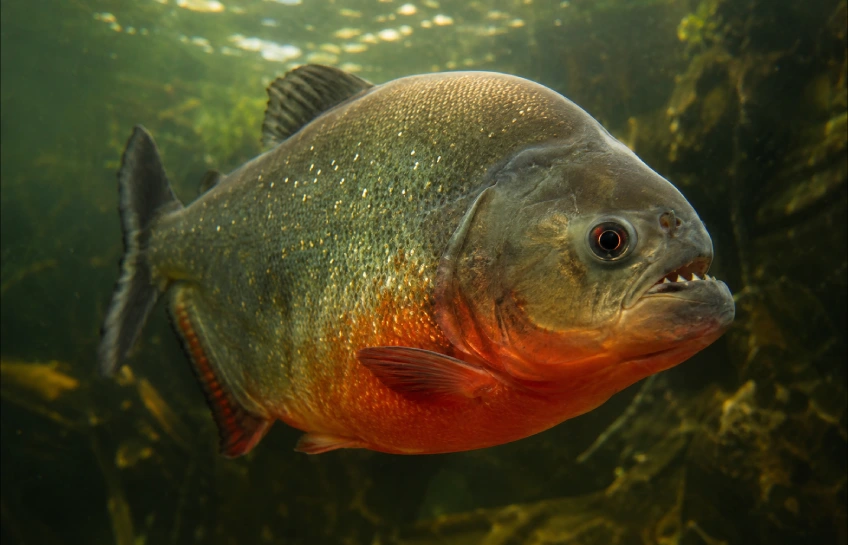
Piragnia — more commonly spelled “piranha” — are freshwater fish that have triggered more fear than almost any other aquatic animal. Most of what people believe about them comes from old films and exaggerated stories, not actual science. This article covers what piragnia really are, where they live, how they behave, what they eat, and why that terrifying reputation doesn’t quite hold up under scrutiny.
What Is Piragnia?
Piragnia refers to a group of freshwater fish native to South America, best known for their sharp interlocking teeth and strong bite. The name traces back to the indigenous Tupi language, loosely meaning “tooth fish” or “scissors fish” — fitting, given how distinctly their dentition sets them apart from other freshwater species. They’re found across major river systems on the continent, with the Amazon Basin being their most recognized home.
Many people assume piragnia are permanently aggressive, but that image was largely shaped by mid-20th century cinema. Real behavioral research paints a far more measured picture. They’re cautious, often shy, and quite unlike the frenzied creatures most films portray.
Basic Classification And Species
Piragnia belong to the family Serrasalmidae, which also includes pacu, silver dollars, and certain tetra species. The red-bellied piranha (Pygocentrus nattereri) is probably the most recognized member — it’s what most people picture and the species most commonly kept in home aquariums worldwide.
There are actually dozens of distinct piranha species, and they differ considerably in size, color, and diet preference. Some lean heavily toward plant material; others are more predatory. Treating them all as identical misses just how varied this fish family really is.
Piragnia Habitat And Distribution
Piragnia thrive in the low-elevation river systems of South America, particularly in the Amazon Basin and connected lakes, floodplains, and tributaries. They’re also found in the Rio Paraguay and Rio Paraná systems. Slow-moving or still water during the dry season tends to concentrate larger groups, as shrinking water levels bring fish closer together.
Water temperature, aquatic vegetation, and available prey all shape where specific species settle. Some have even adapted to reservoirs created by dam construction, showing a degree of flexibility that’s easy to overlook when focusing only on their teeth.
Physical Features Of Piragnia
Piragnia have compact, laterally compressed bodies built for quick movement through dense river vegetation. Their jaw structure carries disproportionate muscle mass for a fish their size, which directly contributes to their cutting efficiency. The triangular teeth fit together precisely — upper and lower rows interlock cleanly — which is what gives them such effective shearing ability.
Red-bellied piranhas display a gray-silver body with a vivid reddish-orange underside running from chin to belly. Most adults grow to around 30–35 cm in length. Some larger individuals in certain species can reach up to approximately 4 kg, though that sits toward the heavier end and varies significantly depending on the species.
How Dangerous Are Piragnia Really?
The idea that piragnia form hunting packs to strip large animals to bone within seconds is, according to modern research, largely exaggerated. They gather in groups mainly as a defensive strategy — being in a school reduces each individual fish’s exposure to predators like caimans, river dolphins, and large wading birds.
Confirmed attacks on humans are genuinely rare, and serious injuries are rarer still. Most incidents happen when someone accidentally steps on or traps a fish, or during the dry season when food becomes scarce. Here’s a direct comparison of common myths against what research actually shows:
| Aspect | Popular Myth | What Research Shows |
|---|---|---|
| Group behavior | They form groups to attack large animals | Groups mainly offer protection from predators |
| Human attacks | They frequently devour swimmers | Confirmed human attacks are rare |
| Overall behavior | Always aggressive and bloodthirsty | Most species are cautious and often scavenge |
Diet And Feeding Habits
Piragnia are generalist feeders — they don’t stick to a single food source. Their natural diet includes fish, insects, crustaceans, worms, mollusks, and plant matter like fruits and seeds that fall from overhanging vegetation into the river. Scavenging on dead or injured animals is common, and it actually makes up a significant portion of what many species consume day to day.
In aquariums, owners typically feed them high-quality pellets, frozen krill, and other prepared proteins on a measured schedule. Overfeeding causes health issues, so controlled portions matter more than most beginners expect. Getting the diet right in captivity requires understanding what the fish actually needs, not just what it’ll readily accept.
Group Behavior In Piragnia
Schools of piragnia can range from a small cluster to well over a hundred individuals, depending on the species and the time of year. Group living helps them stay safer from predators and find food more reliably in murky or vegetation-heavy water, where hunting alone would be far less efficient.
One detail that often surprises people: certain piranhas produce bark-like sounds when agitated or trying to warn off other fish. It doesn’t come up much in popular coverage, but it points toward a more complex social structure than most people associate with this fish.
Keeping Piragnia As Pets
Red-bellied piranhas are occasionally kept in home aquariums, and with the right setup, they can be manageable and genuinely interesting pets. They need large tanks — typically 100 gallons or more for a small group — along with strong filtration, stable water temperature, and appropriate group sizes to stay healthy. Keeping just one alone tends to increase stress and erratic behavior.
Before purchasing, always check local regulations. Some countries, states, and provinces ban piranha ownership entirely due to concerns about invasive species risks. Laws vary widely, so it’s worth confirming what’s permitted in your specific region before investing in a tank setup.
Lifespan Of Piragnia
Red-bellied piranhas can live 10 years or longer under good captive conditions. Wild lifespans tend to be shorter due to predation and environmental stressors, but well-maintained aquarium fish consistently reach the upper range of that figure.
Water quality is the single biggest factor. Stable pH, consistent temperature, and proper nutrition all push lifespan toward its higher end. Fish kept in poor conditions or fed inadequate diets rarely come close to their biological potential, regardless of species.
The Bite Strength Of Piragnia
Relative to body size, piragnia produce one of the strongest bites among bony fish. Their jaw muscles are proportionally large, and the triangular tooth shape concentrates force into a precise cutting edge — a structure that evolved to handle tough materials like scales, fins, hard shells, and bone.
Research has shown that some piranha species can generate bite forces several times their own body weight. That’s a genuine and well-documented anatomical feature, though it should be understood in context: it’s an adaptation for efficient feeding, not a weapon designed for attacking large prey or humans.
Are Piragnia Important In Their Rivers?
Piragnia serve as scavengers and opportunistic predators within South American river ecosystems. By consuming dead, sick, or injured animals, they help reduce disease spread and keep the water environment cleaner overall. It’s a practical function that rarely gets mentioned alongside the statistics about teeth and bite force.
Their varied diet also connects them to nutrient cycling within tropical freshwater systems. When they consume seeds and fruits, nutrients move through the water in ways that benefit the broader environment. Changes like dam construction, water pollution, or overfishing can shift piranha population sizes and behaviors — and that, in turn, affects everything else in the river that depends on those dynamics.
Conclusion
Piragnia are genuinely interesting fish that carry far more myth than reality. Their bite force is real, their teeth are structurally remarkable, and their place in South American rivers is well-established — but the horror-movie version of them simply doesn’t hold up against consistent research findings. Understanding what they actually eat, where they live, and how they behave gives a far more accurate picture, and honestly, a more compelling one than any film has managed.



No Comment! Be the first one.