

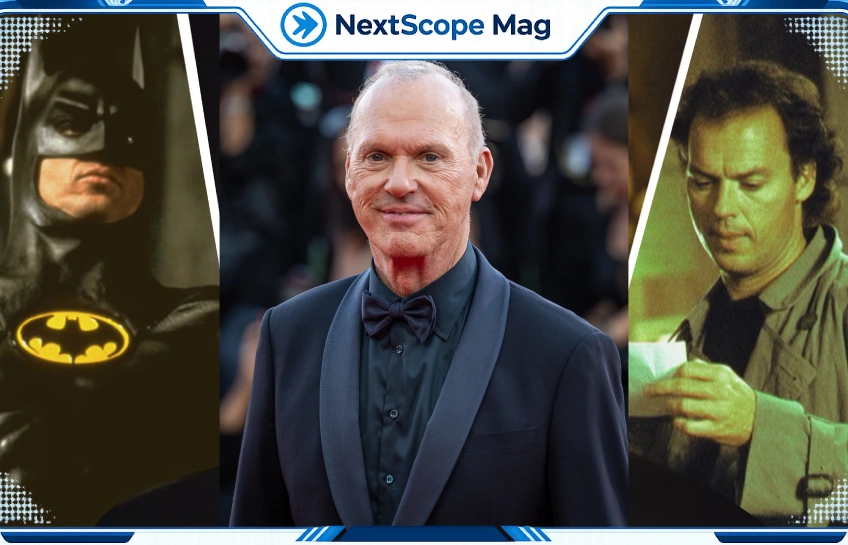
Michael Keaton net worth stands at an estimated $50 million as of 2026. That’s the reward for over four decades of work in Hollywood — from scrappy comedy roles in the early ’80s to two superhero franchises, an Emmy win, and a career comeback that most actors only dream about.
He’s not the richest actor in Hollywood. But his financial story is genuinely interesting, because his wealth didn’t grow in a straight line. There were quiet years, huge career swings, and a second act that changed everything.
Who Is Michael Keaton?
Michael Keaton is an American actor born on September 5, 1951, in Kennedy Township, Pennsylvania. His real surname is Douglas, but he changed it early in his career to avoid confusion with actor Michael Douglas.
Early Life, Roots, and How It All Started
He grew up as the youngest of seven kids. He studied speech briefly at Kent State University before dropping out and eventually working as a TV cameraman in Pittsburgh — earning around $2,000 a year. Not exactly a glamorous start.
His big break came through comedy. Films like Mr. Mom (1983) and Night Shift (1982) showed he had sharp timing and real screen presence. Those roles didn’t make him a millionaire, but they opened the door to something much bigger.
The Tim Burton Years and Hollywood Stardom
When Tim Burton cast him as Batman in 1989, a lot of people were skeptical. Keaton was known for comedies, not action. He proved everyone wrong. Despite initial skepticism from fans due to his comedic background, Keaton’s portrayal of both Bruce Wayne and his caped alter ego was widely praised, and he reprised the role in the 1992 sequel, Batman Returns.
That two-film run with Warner Bros. put him firmly in the top tier of Hollywood earners and set the financial foundation he still benefits from today.
Michael Keaton Net Worth in 2026
Michael Keaton has an estimated net worth of $50 million, well-earned given that he’s been working in the industry for over 40 years, taking roles big and small.
Different sources vary slightly — some estimate closer to $40 million, others go as high as $60 million — but $50 million is the figure most widely cited by credible entertainment outlets heading into 2026.
How His Net Worth Has Changed Over Time
His wealth didn’t always look like this. Through the mid-to-late 1990s and most of the 2000s, Keaton stepped back from the spotlight. Smaller films, fewer blockbusters, and a deliberate move away from franchise work meant his earnings weren’t making headlines.
Then Birdman happened in 2014. That film — and the awards attention it brought — effectively restarted his Hollywood career. Better roles followed, and with better roles came better pay.
| Year/Period | Estimated Net Worth | Key Driver |
|---|---|---|
| Early 1990s | ~$20–25 million (est.) | Batman franchise salary |
| Late 1990s–2000s | Stable / slower growth | Smaller/independent films |
| 2014–2016 | Growth resumes | Birdman, Spotlight |
| 2021–2022 | ~$40 million (reported) | Dopesick Emmy win |
| 2026 | ~$50 million (est.) | Beetlejuice Beetlejuice, ongoing TV work |
Where He Stands Among His Peers
Compared to other Batman actors, his net worth is firmly in the middle range:
- Christian Bale — estimated around $120 million
- Ben Affleck — estimated around $100 million
- Michael Keaton — estimated around $50 million
- Robert Pattinson — estimated around $100 million
Keaton has fewer franchise films under his belt than Bale or Affleck, which explains the gap. But for an actor who walked away from a $15 million Batman deal in the early ’90s, $50 million is still a remarkable outcome.
Main Sources of Michael Keaton’s Wealth
His money comes from several places, not just one big payday. The breakdown matters because it shows how sustainable his income has been across different eras of his career.
Batman and the DC Universe
This is where the big numbers started. Keaton earned $5 million for his work in the 1989 Batman — roughly $10 million in today’s money. He was then paid $11 million to reprise the role in the 1992 sequel. That’s a significant jump between films, a sign of how much leverage the first film’s success gave him.
Warner Bros. desperately wanted him to come back for a third installment, even offering a then-staggering $15 million paycheck. He turned it down — a decision that probably cost him short-term earnings but arguably preserved his reputation and artistic credibility.
Beetlejuice and the Long Tail of Iconic Roles
Beetlejuice (1988) came just before the Batman era and helped establish him as a bankable star. Keaton reportedly earned $5 million for Batman (1989), and in today’s money, that equates to about $13 million.
The Beetlejuice Beetlejuice sequel in 2024 brought him back to one of his most beloved characters. Exact salary figures for the sequel haven’t been confirmed publicly, but projects of that size — especially legacy sequels — typically come with substantial backend deals for the original lead.
Spider-Man, The Flash, and the Marvel/DC Return
His return to superhero films in the 2010s and 2020s added significant income. His performance as the Vulture in Spider-Man: Homecoming reportedly earned him an impressive $12 million.
For The Flash (2023), Keaton reportedly earned $2 million for his return as Batman. That’s lower than his MCU payday, reflecting the film’s budget structure and his supporting role in the story.
Salary Highlights: What He’s Earned Per Role
Here’s a quick look at some of the confirmed and widely-reported figures across his career:
- Batman (1989): ~$5–6 million
- Batman Returns (1992): ~$11 million
- Spider-Man: Homecoming (2017): ~$12 million
- Batgirl (canceled, 2022): ~$2 million (for a cameo-level role)
- The Flash (2023): ~$2 million
The $15 Million Batman Deal He Walked Away From
This is one of the more fascinating footnotes in his financial history. Warner Bros. offered him $15 million to appear in Batman Forever alongside Joel Schumacher as director. He said no, reportedly uncomfortable with the direction the franchise was heading.
Val Kilmer took the role instead. In the short term, Keaton left a lot of money on the table. But it also meant his name stayed associated with the better-regarded Batman films — a fact that clearly had long-term brand value when he returned to the role 30-plus years later.
Royalties, Residuals, and Passive Income
Beyond one-time paychecks, actors at Keaton’s level typically earn ongoing residuals from TV broadcasts, home video sales, and streaming deals. Films like Batman, Beetlejuice, and Birdman have stayed in regular rotation for decades. Those residuals add up quietly over time and are part of what keeps a net worth stable even during slower career periods.
Assets, Lifestyle, and Investments
Keaton’s wealth isn’t just sitting in a bank account. He’s put money into real estate over the years, though he’s generally private about his personal finances.
Real Estate Holdings
In 1987, Keaton paid $1.3 million for a large home on a half-acre in LA’s Pacific Palisades neighborhood, a property he still owns. In 1989, he paid $1.5 million for a home near Santa Barbara, California, which he later sold in 2011 for $3.1 million. In 2016, he bought another property near Santa Barbara for $5 million.
He also bought a large ranch close to Big Timber, Montana, in the 1980s — an 8,200-square-foot property he reportedly purchased for around $9 million. By multiple accounts, this Montana ranch is where he spends a lot of his time and is central to his personal life.
His real estate portfolio, across multiple properties in California and Montana, represents a meaningful chunk of his total wealth.
Lifestyle
Keaton has never been particularly flashy about his money. He’s rarely discussed in the context of celebrity excess. His public persona — grounded, dry-humored, private — seems to match a lifestyle that’s comfortable but not outlandish. Most interviews describe him as someone who genuinely loves acting rather than someone chasing paychecks.
Awards, Recognition, and Their Impact on Earnings
Winning awards in Hollywood isn’t just about a trophy. It directly affects what an actor can charge for their next job.
How Birdman and Dopesick Changed His Earning Power
Birdman (2014) was the real turning point. The film won Best Picture at the Oscars, and Keaton received a Golden Globe for his performance. He didn’t win the Oscar, but the attention and critical respect he earned from the film changed how studios and producers saw him.
Dopesick (2021), the Hulu limited series about the opioid crisis, pushed him even further. His accolades include a Primetime Emmy Award and two Golden Globe Awards, in addition to nominations for an Academy Award and a BAFTA Award. Winning the Emmy for Dopesick confirmed what Birdman had suggested — he wasn’t just a nostalgic name, he was still one of the best working actors in the industry.
That kind of recognition translates directly into bigger offers. It’s no coincidence that his return to Beetlejuice and his Batman appearances in the DC universe came in the years right after his awards resurgence.
Frequently Asked Money Questions About Michael Keaton
How much did Michael Keaton make from Batman? Roughly $5–6 million for the 1989 film and around $11 million for the 1992 sequel. He was offered $15 million for a third film but turned it down.
Did Michael Keaton lose money by leaving Batman? Short-term, yes — the $15 million offer was real. Long-term, it’s hard to say. The films he made after Batman kept his artistic credibility intact, and his eventual return to the role in The Flash suggests the character stayed bankable even after a 30-year gap.
How has Beetlejuice 2 affected his net worth? Beetlejuice Beetlejuice (2024) was a significant box office success, and his movies have collectively grossed over $6 billion at the box office. The sequel’s performance likely included backend participation, adding to his overall wealth — though specific figures haven’t been confirmed.
What’s Michael Keaton’s annual income now? This is hard to pin down precisely. It depends entirely on what he’s filming. At his level, a single major film role can bring in several million dollars, while quieter years would see significantly less. Residuals and licensing provide a consistent baseline regardless.
Final Thoughts on Michael Keaton’s Career and Wealth
Michael Keaton net worth of around $50 million reflects something more interesting than just a long career. It reflects a career with genuine peaks and valleys — a massive early run, a deliberate step back, and then a second act that came with its own set of critical wins and box office returns.
He walked away from a $15 million deal in the ’90s, spent years doing smaller work, won an Emmy in his 70s, and came back to play Batman again. The money is good. But the story behind the money is actually better.
If you found this breakdown useful, share it with someone who’s always wondered what the original Batman is worth — or check out our other celebrity net worth profiles for more Hollywood financial deep-dives.



No Comment! Be the first one.