

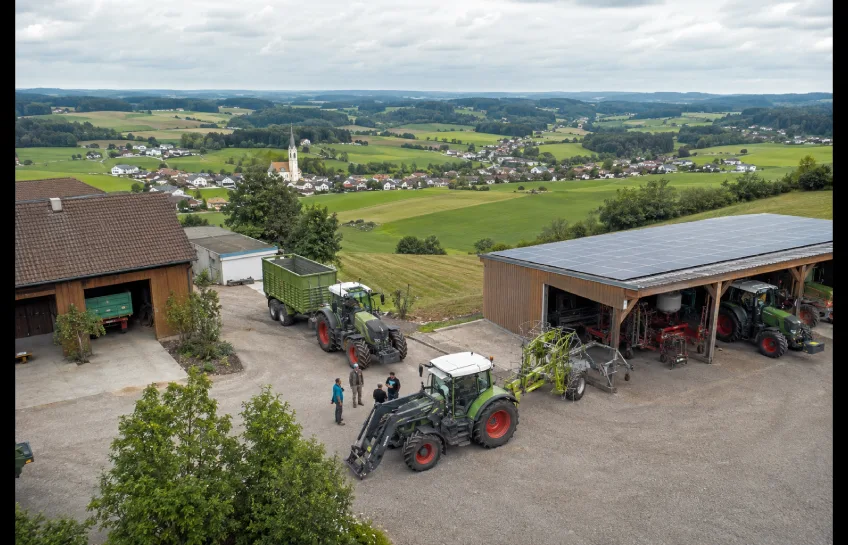
Few people outside rural Austria have heard of the Maschinenring, but for farmers, municipalities, and local businesses in the region, it’s one of the most practical organizations around. The Maschinenring Mining branch — based at Hofmark 5 in Mining, Upper Austria — is a key node in one of Austria’s largest service networks. Whether you’re a farmer who needs an extra pair of hands during harvest or a business that wants reliable winter gritting, this is where a lot of that gets organized. This article covers what Maschinenring Mining actually does, where it came from, and who uses it.
What Is a Maschinenring, Exactly?
The word translates roughly as “machine ring.” The concept is simple: farming operations share machinery and labor with each other instead of every individual farm buying and maintaining equipment on its own.
The first Maschinenring was founded in 1958 in Buchhofen, Bavaria, by a farmer named Erich Geiersberger. The idea spread fast. Austria adopted it, and the network there has grown to around 80 regional rings operating under a national umbrella. The Maschinenring has since expanded beyond purely agricultural tasks into green space maintenance, forestry, snow clearance, and temporary staffing.
Today, it’s both a cooperative and a commercial service provider. Members — mostly farmers — can earn income by working for other farms or for non-agricultural clients. That dual function keeps rural income circulating within the region.
Where Is Maschinenring Mining Located?
Mining is a municipality in the Braunau am Inn district of Upper Austria (Oberösterreich), in the Innviertel region near the German border. The Maschinenring Oberösterreich Service eGen has a branch there at Hofmark 5, 4962 Mining.
This branch serves local farms and businesses in the surrounding area. It functions as an access point for the broader Maschinenring Oberösterreich network, which is coordinated from the regional headquarters in Linz. If you’re in the Braunau district looking for seasonal workers, machinery, or landscape services, this is the local contact point.
Services the Maschinenring Offers in the Region
The scope of what Maschinenring branches handle has expanded well beyond machinery loans. The current service range includes:
Agricultural services:
- Machinery sharing and coordination between member farms
- Seasonal labor placement — harvesting, planting, animal care
- Farm relief workers when a farmer is sick or otherwise unavailable
Non-agricultural services:
- Winter maintenance: snow removal, gritting, road clearing
- Green space and tree care for municipalities, housing developments, and private clients
- Garden and landscape construction
- Forestry work
- Building and property management services
The non-agricultural side now generates substantial revenue. Maschinenring Oberösterreich describes itself as one of Upper Austria’s leading service companies, not just an agricultural cooperative. That shift happened gradually over decades as demand from municipalities and businesses grew.
Who Actually Uses It?
The client base is broader than most people expect. It’s not just farmers helping each other out.
Typical clients include:
- Farms and agricultural businesses — the original and still-core users, sharing equipment costs and labor
- Local municipalities — contracting winter road services and public green space maintenance
- Housing associations and developers — grounds maintenance for apartment complexes
- Mid-sized businesses — temporary staffing through Maschinenring’s personnel division
- Private homeowners — garden work, tree trimming, one-off outdoor projects
The staffing component is particularly useful. Businesses get workers who come directly from the local region, and farmers get a side income during quieter periods on their own land.
How the Cooperative Structure Works
Maschinenring operates as a registered cooperative (eGen in Austrian legal terms — eingetragene Genossenschaft). Members are mainly farmers who pay into the cooperative and can both offer and request services through it.
When a farmer wants to lend out their tractor and operator skills, they register availability with the ring. When another member or an outside client needs that service, the ring coordinates the match. The billing, insurance, and logistics all run through the organization rather than needing individual arrangements between parties.
The cooperative model means profits stay within the member structure. There’s no outside shareholder taking a cut. That’s a genuine practical advantage for rural regions where keeping money local matters for the long-term viability of small farms.
Maschinenring in Upper Austria: Scale and Reach
Maschinenring Oberösterreich is the provincial body that coordinates all the rings within Upper Austria, including the Mining branch. The regional office sits in Linz at Auf der Gugl 3.
Its responsibilities include:
- Large client account management
- Quality control across the regional network
- IT infrastructure and payroll processing for member workers
- Developing new service lines and business areas
Upper Austria is one of Austria’s most agricultural provinces, which makes the density of Maschinenring activity there especially high. The organization describes itself as the largest employer in rural Upper Austria — a claim that reflects how central the staffing function has become.
Internationally, the Maschinenring has spread beyond Germany and Austria. It now operates in France, the UK, Switzerland, Luxembourg, Hungary, Slovenia, Italy (South Tyrol), Norway, Sweden, Finland, Latvia, and several other countries. There are even rings in Brazil, Japan, Australia, and Senegal.
Maschinenring vs. Hiring a Private Contractor
One question people often have: why use Maschinenring instead of just calling an independent landscaping or machinery company?
A few practical differences:
- Local knowledge — Workers come from the immediate area and know the terrain, local regulations, and seasonal conditions
- Price structure — Because the cooperative model reduces overhead, rates tend to be competitive
- Insurance and compliance — Employment paperwork, insurance, and tax compliance run through the organization, reducing admin for clients
- Flexibility — Seasonal peaks like heavy snowfall or harvest time are exactly when demand spikes; Maschinenring pools resources to meet that demand across members
That said, it’s not always the cheapest option for every job, and a specialist contractor may be better for highly technical or one-off work. For recurring, season-driven work, the Maschinenring arrangement generally makes more sense.
FAQ: Maschinenring Mining
What is Maschinenring Mining? It’s a local branch of the Maschinenring Oberösterreich cooperative, located in Mining, Upper Austria. It coordinates agricultural machinery sharing, farm labor, and service contracts for farms, municipalities, and businesses in the region.
Where is the Maschinenring Mining office? The address is Hofmark 5, 4962 Mining, Oberösterreich, Austria. It’s a branch of the regional Maschinenring Oberösterreich organization.
What services does Maschinenring offer in the Mining area? Services include agricultural labor placement, machinery sharing, winter road maintenance, green space and tree care, garden construction, forestry work, and temporary staffing for businesses.
Is Maschinenring only for farmers? No. While the membership base is primarily agricultural, non-farming clients — including municipalities, housing associations, and private households — regularly use Maschinenring service divisions.
How does someone become a Maschinenring member? Membership is open to agricultural operators in the region. You register with the local ring, pay membership fees, and can then both use and provide services through the cooperative network.
Is Maschinenring a public or private organization? It’s a registered cooperative (eGen), meaning it’s privately run but structured so that members share ownership and profits. It receives some state support in certain areas but isn’t a government body.
Does Maschinenring operate outside Austria? Yes. The broader Maschinenring network spans over a dozen countries across Europe and has presence in South America, Asia, and Africa as well.
Why Maschinenring Mining Is Worth Knowing About
The Maschinenring system works because it solves a real problem: small farms and local businesses often can’t afford to do everything alone. By pooling machinery and labor, the cooperative keeps operations viable and money circulating within the region. The Mining branch is one piece of a much larger network, but it serves a genuinely useful function for Upper Austria’s Innviertel region.
If you’re a farmer looking at membership, or a business in the area that needs seasonal services, the Maschinenring Oberösterreich website at maschinenring.at is the right starting point. You might also want to look into how Maschinenring’s personnel division works — especially if you’re managing staffing for irregular or weather-dependent work.


No Comment! Be the first one.