

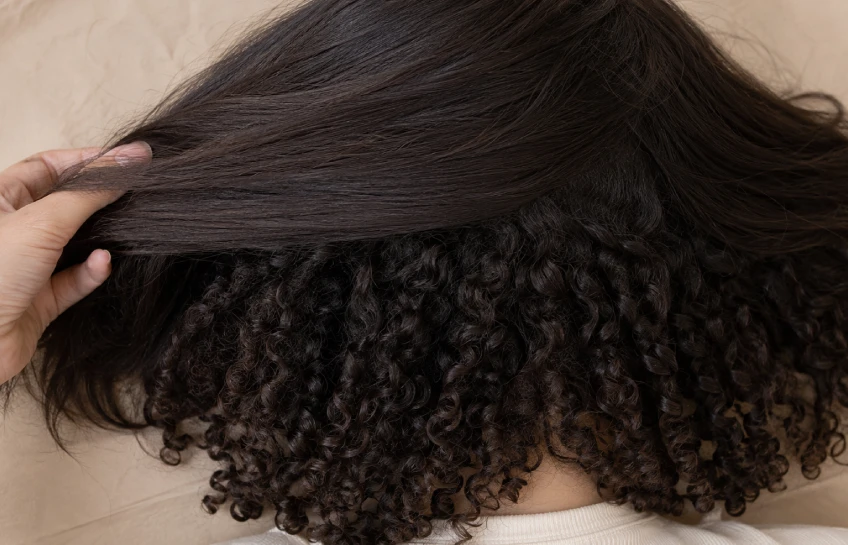
A lot of people look in the mirror after washing their hair and notice something odd. The top of their hair looks almost straight or barely wavy, but flip it over and the underneath is full of defined, springy curls. That’s irish curls — and it’s way more common than most people think.
The term blew up on TikTok and Instagram Reels, where creators started sharing videos showing the dramatic difference between their flat outer layer and the curly underneath. Comments were full of people saying “wait, that’s exactly my hair.” So if you’ve been confused about your curl pattern for years, this article is for you.
What Are Irish Curls?
Irish curls describe a mixed-texture hair pattern where the top or outer layer — called the canopy — looks straight or barely wavy, while the hair underneath is noticeably curly or wavy. The two layers don’t match, which is what makes this pattern so confusing.
This isn’t a formal hair-typing category. It’s a term that took off on social media to describe something real that millions of people experience but didn’t have a name for. Hair professionals have confirmed it’s a legitimate pattern difference — not imagination.
How Irish Curls Look vs. Regular Curly Hair
With standard curly hair, the curl pattern is fairly consistent from the roots to the ends across most sections. With irish curls, the outer canopy lays flatter or straighter, while the inner and lower layers curl up more tightly. The contrast can be pretty dramatic.
Common Myths About Irish Curls
There are a few things people get wrong about this pattern:
- “My hair isn’t actually curly” — It is. The curl is just hiding under a flatter outer layer.
- “Nothing will fix it” — Most cases improve a lot with the right products and routine changes.
- “I’m not doing curly hair right” — This pattern needs a different approach, not the same routine as evenly curly hair.
How To Tell If You Have Irish Curls
The clearest sign of irish curls is seeing a straight or flat outer layer on top while the hair underneath shows a defined curl or wave pattern. This usually becomes more obvious after washing and air drying without any heat.
Key Visual Signs To Look For
- The crown or canopy area dries flat or fluffy with no curl definition
- Underneath layers have visible curl clumps or waves
- Hair looks poofy or frizzy at the roots rather than defined
- Pulling back the top layer reveals much curlier hair beneath
Simple Tests To Check Your Curl Pattern
One of the easiest ways to check is a wash-and-go test. Wash the hair, apply a light leave-in conditioner, and let it air dry completely without touching it. Once it’s dry, look at the crown versus the underneath sections. If the underneath shows curl and the top doesn’t, that’s a strong sign of this pattern.
Another test: separate a small section from the outer canopy and a section from underneath. Look at how each dries separately. The difference is usually obvious.
What Causes Irish Curls In The First Place?
Irish curls aren’t just a natural phenomenon for everyone who has them. In many cases, specific habits or damage are making the pattern worse than it needs to be. There are a few main causes.
Heat Damage on the Top Layer
The top layer of hair takes the most direct heat when using flat irons, straighteners, or curling tools. Over time, repeated heat styling can loosen or break the curl pattern on those outer sections while the underneath — which gets less direct heat — stays curlier. This is one of the most common causes of the irish curls pattern.
Product Buildup Blocking Curls
Heavy products like thick creams, butters, and silicone-based serums build up on the outer layer of hair first. When that buildup sits on the canopy, it weighs the hair down and prevents curls from forming properly. The underneath layers don’t collect as much buildup, so they curl more freely.
Hair Porosity and Mixed Curl Patterns
Hair porosity affects how well it absorbs and holds moisture. Some people naturally have different porosity levels across different sections of their hair. Low porosity hair on the outer canopy resists moisture and products, which can stop curls from forming well. Understanding porosity helps when choosing the right products.
Other Contributing Factors
| Cause | Effect on Hair |
|---|---|
| Heat damage on canopy | Top layer loses curl pattern over time |
| Product buildup | Weighs down outer layer, blocks curl formation |
| Inconsistent layering | Heavy top layers press down on curls |
| Mixed porosity | Different sections respond to products differently |
| Genetics | Some people naturally have mixed curl textures |
Must-Know Care Rules For Irish Curls
Good care routines for irish curls focus on resetting the canopy, reducing buildup, and giving the hair what it needs to curl consistently.
Clarifying Shampoo — How Often and How To Use It
Clarifying once or twice a month removes the product buildup that blocks curl formation on the outer layer. It’s not the same as a regular shampoo. A clarifying shampoo strips everything off the hair shaft so curls can start fresh. After clarifying, always follow with a deep conditioner to put moisture back in.
Balancing Moisture and Protein
Irish curls often need a balance of both. Moisture keeps the hair soft and stretchy. Protein fills in damage on the cuticle and helps the curl pattern hold its shape. If hair feels mushy or stretches and doesn’t bounce back, it needs protein. If it feels stiff or breaks easily, it needs moisture.
Choosing Lightweight Products That Won’t Flatten the Canopy
Heavy creams and butters are often the wrong choice for the outer canopy. Lightweight options work better for the top layer:
- Spray leave-in conditioners
- Water-based curl creams
- Lightweight mousses
- Curl-activating gels with a light to medium hold
The underneath layers can handle slightly richer products if they’re drier or more porous.
Step-By-Step Irish Curls Styling Routine
A consistent styling routine makes a real difference for this hair type. The goal is to encourage curl formation on the canopy while maintaining definition in the underneath layers.
Wash Day Prep
Start with a clarifying shampoo if it’s a clarifying week, or a sulfate-free shampoo otherwise. Apply a moisturising conditioner, focusing on the canopy. Detangle in sections while the conditioner is in, using fingers or a wide-tooth comb.
Applying Products for Mixed Textures
Apply a spray leave-in conditioner to the whole head while it’s still dripping wet. Then apply a lightweight curl cream or mousse, starting from the underneath layers first and working up to the canopy. Use less product on the top section to avoid weighing it down.
Sectioning and Finger Coiling Problem Areas
For sections on the canopy that don’t want to curl, finger coiling helps. Take small sections of the hair, apply a little gel, and wrap them around a finger to encourage curl formation. Let them air dry without disturbing them.
Diffusing vs. Air Drying
Both work — it depends on time and the look wanted:
- Air drying gives softer curls with less frizz but takes longer
- Diffusing speeds up drying and adds volume at the roots, which helps the canopy look less flat
- Scrunch the hair upward while diffusing to encourage curl clumping
Haircuts and Salon Tips for Irish Curls
Getting the right haircut is one of the most underrated fixes for this pattern.
Why Strategic Layers Help Even Out the Curl Pattern
Heavy, blunt ends on the outer canopy press down on the layers underneath and stop them from curling properly. Adding layers throughout the hair — especially in the crown area — removes that weight. Lighter sections curl more easily on their own.
What To Tell Your Stylist
Not every stylist understands irish curls. Here’s what helps when booking an appointment:
- Ask specifically for a “curl-by-curl” or “DevaCut”-style haircut
- Mention that the outer canopy is straight but the underneath is curly
- Ask them to add internal layers at the crown to reduce weight
- Avoid cutting hair when it’s wet if possible — curly hair should be cut dry so the stylist can see the actual pattern
Growing Out Heat-Damaged Top Layers
This takes time but it’s worth it. Stopping heat on the outer layer and protecting it while it grows is the main approach. Protein treatments every few weeks help strengthen the new growth. Protective styles like low buns or claw clips keep the canopy from breaking off during the transition period.
Product Recommendations for Irish Curls
These are product types that consistently work well — not sponsored picks, just what works for mixed-texture patterns.
Shampoos and Clarifiers
A good clarifying shampoo should be used monthly. For weekly washing, a sulfate-free, moisturising shampoo keeps the hair clean without stripping it every time.
Curl Creams, Mousses, and Spray Gels
- Curl creams — best for underneath layers that need moisture and definition
- Mousses — lightweight enough for the canopy, adds hold without weight
- Spray gels — great for the top layer because they distribute evenly and don’t clump
Treatments and Masks for Damaged or Frizzy Irish Curls
A protein mask every two to four weeks helps rebuild the cuticle on heat-damaged sections. A deep moisture mask should follow within a week to keep the balance right.
Tools Worth Buying
- A microfiber towel or an old cotton T-shirt for drying (avoids frizz)
- A hooded or handheld diffuser attachment for the blow dryer
- Claw clips for plopping the hair while it dries
- A wide-tooth comb or a detangling brush for wet detangling
FAQs About Irish Curls
Are Irish Curls a Real Hair Type or Just a Trend Name?
It’s a real phenomenon with a trend name. The mixed-texture pattern is genuine — hair experts back that up. The term “irish curls” just made it easier to talk about online.
Can You Permanently Fix Uneven Curls?
If the cause is heat damage, stopping heat and giving hair time to grow is the closest thing to a permanent fix. If it’s a natural mixed-texture pattern, it won’t fully change — but the right routine can make the difference between the two layers much less noticeable.
How Long Does It Take To See Results After Changing Your Routine?
Most people notice some improvement within two to four weeks of switching to lightweight products and clarifying regularly. Seeing full curl recovery from heat damage takes longer — usually several months of consistent care.
Can the Curly Girl Method Work for Irish Curls?
It can, but it sometimes needs adjusting. The standard curly girl method can over-moisturise the canopy, which makes it flatter. A modified version with less cream on the top layer and more mousse or gel tends to work better for this pattern.
Start Small and Be Patient With Your Curls
Irish curls can feel frustrating when the top layer just won’t cooperate. But the pattern usually improves a lot with the right combination of clarifying, lightweight products, protective layering, and time away from heat. The change doesn’t happen overnight, but it does happen.
Start by clarifying once this week, swap the heavy products for something lighter on the canopy, and let the hair air dry completely without touching it. That first wash-and-go after making changes often surprises people. The curls were there the whole time — they just needed the right conditions to show up.
Got questions about your specific curl pattern? Drop them in the comments — the curly hair community has probably been through the same thing.



No Comment! Be the first one.