

Car maintenance doesn’t have to be hard. Every vehicle needs regular care to stay on the road. Knowing how to check transmission fluid is a great skill to learn. It helps drivers avoid expensive transmission repairs down the line. People often look up this topic when their car acts up. Slipping gears or unusual noises often point to low fluid levels. This article covers everything a car owner needs to know. It explains the right steps, fluid colors, and tools required for the job.
What Transmission Fluid Does and Why Level Matters
Summary: Transmission fluid lubricates internal gears, cools the system, and provides hydraulic power to shift smoothly. Low fluid levels cause overheating and severe mechanical damage over time.
Role of Transmission Fluid in Automatic and Manual Gearboxes
Transmission fluid acts as the lifeblood of a car’s gearbox. In automatic cars, it creates hydraulic pressure. This pressure helps the car change gears. In manual cars, the fluid mainly lubricates metal parts. It stops grinding and wear. Both systems need clean fluid to work right.
Common Symptoms of Low or Old Transmission Fluid
Cars often show clear warning signs. Drivers might notice delayed or harsh shifting. Slipping gears are another huge red flag. Sometimes, the car hesitates before moving. Drivers might also hear strange whining noises. These symptoms usually mean the fluid is low or very old.
Risks of Ignoring Fluid Checks and Overdue Service
Skipping routine car maintenance is risky. Low fluid causes massive friction. Friction creates extreme heat. This heat destroys torque converters and internal clutches. Rebuilding a gearbox costs thousands of dollars. A simple transmission fluid check prevents these huge bills.
Before Starting: Safety, Tools, and Manufacturer Guidelines
Summary: Safety comes first by parking the vehicle on level ground and gathering simple tools like a rag and funnel. Drivers must always check the vehicle owner’s manual for specific instructions before opening the hood.
Safety Precautions and Working on a Level Surface
Safety matters most when working on cars. A vehicle must sit on a completely level surface. This ensures an accurate transmission fluid reading. The parking brake must be fully engaged. Drivers should wear safety glasses and gloves. Parts under the hood get very hot.
Tools and Items Needed
People don’t need fancy tools for this job. A few basic items work perfectly.
- A clean, white lint-free cloth or paper towel.
- A long-neck funnel for adding fluid.
- Nitrile gloves to keep hands clean.
- A car jack and stands (only for sealed gearboxes).
Reading the Owner’s Manual First
Every car model is different. The vehicle owner’s manual holds the exact rules. It tells drivers where to look. It also lists the exact ATF fluid type needed. Using the wrong fluid destroys gearboxes fast.
How to Locate the Transmission Fluid Dipstick or Fill Point
Summary: Finding the transmission fluid dipstick usually involves opening the hood and looking near the back of the engine bay. However, many modern cars have sealed systems that require checking via an under-car fill plug.
Identifying the Transmission Dipstick Under the Hood
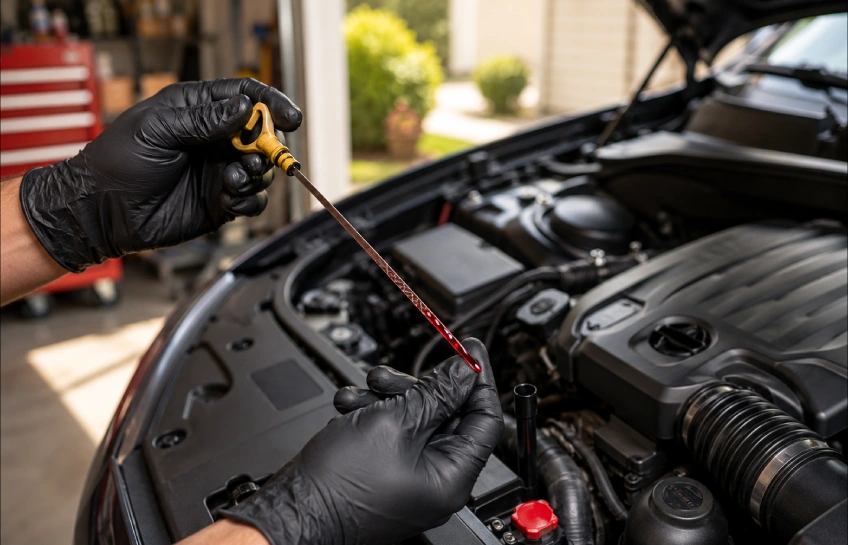
Most older automatic cars use a dipstick. It usually sits near the firewall. This is the back part of the engine bay. The handle is often brightly colored. It might be red, yellow, or pink. It sometimes has a transmission symbol on it.
Differences Between Automatic, Manual, and CVT Setups
Gearboxes have different designs. Traditional automatics usually have a dipstick on top. Manual gearboxes rarely have one. They use a fill plug on the side instead. CVT transmissions vary widely. Some have a dipstick, while others are totally sealed.
Dipstick-Less and Sealed Units
Car brands change their designs often. Many newer or sealed transmissions lack a traditional dipstick. Car owners can’t check these from the top. They must check the level through a fill or inspection plug. This usually requires getting under the car.
How to Check Transmission Fluid with a Dipstick
Summary: To check the fluid properly, a person pulls the dipstick out, wipes it clean, pushes it fully back in, and pulls it out again. The fluid mark must sit safely between the MIN and MAX lines.
Warming Up the Engine and Choosing Park vs Neutral
Temperature matters for accurate readings. Most guides say to check the fluid with the engine warm. The car needs to idle for a few minutes. The transmission should usually be in Park or Neutral. The manual confirms which gear is right.
Removing, Wiping, Reinserting, and Reading
The actual check is simple. A driver removes the transmission dipstick and wipes it completely clean. They reinsert it all the way down into the tube. Next, they pull it out again to read the fluid level.
Understanding MIN/MAX Markings
Dipsticks have clear markings. They usually show MIN/MAX or LOW/FULL indicators. The fluid streak should land right between these two marks. If it sits below the MIN line, the car needs more fluid.
How to Inspect Transmission Fluid Color, Smell, and Condition
Summary: Healthy transmission fluid looks bright red or pink and has a slightly sweet smell. Dark brown or black fluid with a strong burnt smell signals severe internal wear or overheating.
What Healthy Fluid Looks and Smells Like
Fluid color tells a big story. Drivers always inspect the fluid’s color and smell. Healthy fluid tends to be bright red or pink. It should look clear and clean. It usually smells slightly sweet. It shouldn’t have dirt or metal flakes in it.
Signs of Burnt, Dirty, or Contaminated Fluid
Bad fluid is easy to spot. Dark, burnt-smelling fluid signals internal wear or overheating. Dark brown fluid means it’s old and needs changing. Black fluid is a terrible sign. Milky pink fluid means coolant mixed into the gearbox.
When a Full Service is Better Than a Top-Up
Sometimes adding fluid isn’t enough. If the fluid looks burnt or black, a simple top-up won’t fix it. The car needs a full transmission fluid change. A professional transmission flush clears out bad oil. It restores smooth shifting and prevents failure.
Transmission Fluid Color Guide
| Fluid Color | Condition | Action Required |
|---|---|---|
| Bright Red / Pink | Healthy / New | None. Fluid is in great shape. |
| Light Brown | Aging | Plan for a fluid change soon. |
| Dark Brown | Dirty / Old | Fluid change service needed immediately. |
| Black / Burnt | Severe Wear / Overheating | Inspect gearbox for damage. Replace fluid. |
| Milky Pink | Coolant Contamination | Major repair needed. Tow to workshop. |
How to Top Up Transmission Fluid Safely
Summary: Adding transmission fluid requires a clean funnel and slow, careful pours to prevent messy overflows. Drivers must strictly use the OEM transmission fluid type specified by the car manufacturer.
Choosing the Correct ATF Type
Cars are very picky about fluids. A driver must check the manual for the OEM transmission fluid specifications. Using a random fluid ruins the internal clutches. Mechanics always match the exact ATF fluid type to the car model.
Adding Fluid Without Overfilling
Patience is key here. A person places a long funnel into the dipstick tube. They pour a very small amount of fluid. Adding half a pint at a time is smart. Transmission fluid overfilling causes leaks and shifting problems.
Rechecking the Level
It takes time for thick fluid to drain down. A driver waits a minute after pouring. Then, they recheck the level using the dipstick. They repeat this step until the fluid hits the safe zone. Finally, they secure the dipstick back in place.
Special Cases: Manual, CVT, and Dipstick-Less Transmissions
Summary: Manual gearboxes, CVTs, and sealed modern automatics mostly require safely lifting the car to check an underside fill plug. Because these systems are complex, many owners rely on professional mechanics for this service.
Checking Manual Gearbox Oil
Manual cars require extra effort. They don’t have a top-mounted dipstick. A mechanic lifts the car safely on stands. They locate the fill plug on the side of the gearbox. They remove the plug. The fluid should sit right at the bottom edge of the hole.
CVT and Modern Automatics
New technology changes how mechanics work. Many resources note that newer cars lack a traditional dipstick. Some CVT units require precise temperature scans during checks. The owner’s manual dictates the exact steps.
When to Leave It to a Professional Mechanic
Some jobs are too messy for the driveway. If a car requires lifting or removing under-body panels, it gets tough. Many owners have a workshop check the level. A professional auto repair shop does this quickly and safely.
Frequently Asked Questions About Checking Transmission Fluid
Summary: Common questions address whether the car engine should be running, how often to check the fluid, and the massive risks of driving with low levels. Most answers depend on manufacturer guidelines.
Do You Check Transmission Fluid with the Engine On or Off?
Most automatic cars require the engine to be running and warm. This expands the fluid for a true reading. However, a few brands prefer the engine off. The manual always holds the final answer.
How Often Should You Check the Fluid?
Regular checks catch small leaks early. Experts suggest checking under-hood fluids once a month. Proactive checks help learn basic car maintenance. They also help drivers spot low fluid before symptoms start.
Can You Drive with Low Transmission Fluid?
Driving with low fluid is a huge mistake. The gearbox loses its lubrication and cooling power. This quickly leads to slipping gears and overheating. Drivers should top up the fluid or call a tow truck immediately.
Conclusion
Understanding how to check transmission fluid saves money and stress. It helps car owners spot dangerous symptoms like slipping gears or harsh shifts early. By following basic safety rules and checking the dipstick properly, anyone can keep their car running great. Healthy, bright red fluid means a happy gearbox. Take a few minutes this weekend to pop the hood and check those vital fluids!



No Comment! Be the first one.