

Most people think a nice home update needs thousands of dollars. That’s not true. Home improvements for under $500 can make your house look newer, feel more comfortable, and even raise its resale value. You don’t need a big loan or a full renovation crew. You just need the right projects and a smart plan.
This guide solves a common problem: wanting a better home without breaking the bank. Many homeowners delay small fixes because they assume everything is expensive. In reality, some of the most noticeable changes cost less than a weekend grocery run.
By the end of this article, you’ll know exactly which upgrades give you the best return, how to avoid wasting money, and which tools and resources make these projects easier. Let’s start by understanding why budget-friendly home improvements matter more than ever in 2026.
Why Budget-Friendly Home Improvements Matter Right Now
Home improvements for under $500 are not just a trend. They’re a response to rising costs. Material prices and labor rates have both climbed over the past few years, making big renovations less realistic for average households.
At the same time, more people are staying in their current homes longer instead of moving. That means small, smart updates carry more weight. A fresh coat of paint or an upgraded light fixture can refresh a space without needing a full remodel.
Real estate data consistently shows that small cosmetic updates, like new hardware, lighting, and paint, offer some of the highest returns compared to their cost. Buyers notice fresh, clean spaces even if the bones of the house haven’t changed. This is why budget improvements matter: they deliver visible results without financial stress.
The 5 Best Home Improvements for Under $500
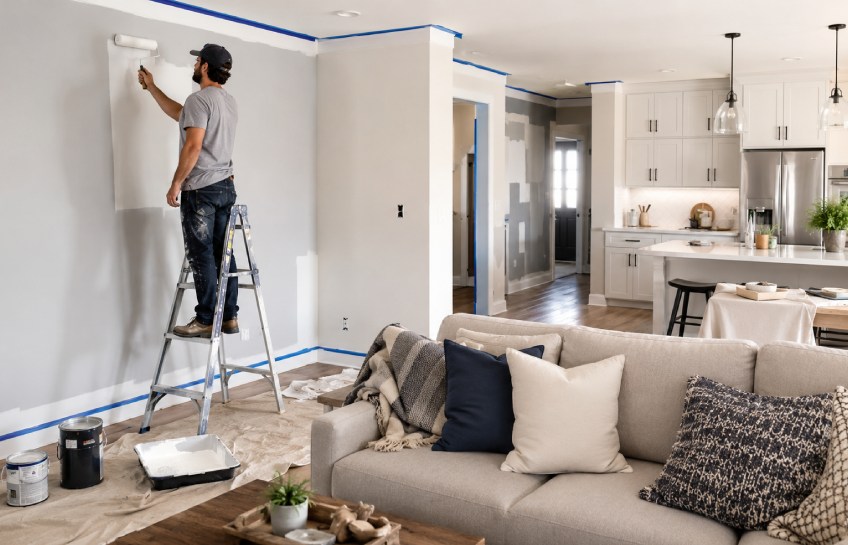
1. Fresh Interior Paint
What it is: Painting one or two rooms with a modern, neutral color.
Think of paint like makeup for your walls. It hides small flaws and instantly changes the mood of a room, all without touching a single wall structure.
Why it matters: Faded or outdated paint makes a home feel tired, even if everything else is in good shape. Skipping this update can make your home look older than it really is, especially to buyers or guests.
How it works: Clean the walls, patch small holes, tape off trim, then apply two coats of quality paint. A 10×12 room usually needs one gallon for two coats.
Real world example: Many house-flipping shows, including projects featured by HGTV renovators, use fresh paint as the first and cheapest way to boost a home’s appeal before listing it.
Common mistakes: People skip patching holes or use cheap paint that needs three coats. This wastes both time and money.
Pro tip: Choose a warm white or light gray. These colors appeal to almost everyone and make rooms look bigger.
2. Upgraded Cabinet and Door Hardware
What it is: Swapping old knobs, pulls, and hinges for modern versions.
It’s like changing the shoes on an outfit. The rest stays the same, but the whole look feels updated.
Why it matters: Worn or mismatched hardware is one of the first things people notice in kitchens and bathrooms. Ignoring it keeps a space looking dated no matter what else you improve.
How it works: Measure your current hardware spacing, order matching sizes, and use a simple screwdriver to swap each piece. Most homeowners finish an entire kitchen in one afternoon.
Real world example: Home renovation contractors often list cabinet hardware swaps as one of the fastest ways to modernize a kitchen without replacing cabinets.
Common mistakes: Buying hardware without checking hole spacing, which leads to visible extra holes.
Pro tip: Stick to one finish, like matte black or brushed nickel, throughout the whole house for a cohesive look.
3. Smart Thermostat Installation
What it is: Replacing your old thermostat with a smart, programmable one.
Think of it as giving your home a brain for temperature control. It learns your habits and adjusts automatically.
Why it matters: Old thermostats waste energy by heating or cooling empty rooms. Ignoring this can mean higher utility bills every single month.
How it works: Turn off power at the breaker, remove the old thermostat, connect the labeled wires to the new unit, then follow the app setup instructions.
Real world example: Energy providers like ENERGY STAR have reported that smart thermostats can meaningfully reduce heating and cooling costs when used consistently.
Common mistakes: Skipping the wiring photo before removal, which causes confusion during installation.
Pro tip: Set a schedule that lowers temperature automatically at night and while you’re away.
4. Landscaping and Curb Appeal Touch-Ups
What it is: Trimming bushes, adding mulch, and planting a few flowers near the entrance.
This is like framing a picture. The house stays the same, but it looks far more finished and cared for.
Why it matters: The front yard creates the first impression for guests and buyers. A messy yard can make even a well-kept interior seem neglected.
How it works: Clear dead plants, edge the lawn, add fresh mulch, and plant low-maintenance flowers near the walkway.
Real world example: Real estate agents frequently recommend quick curb appeal projects before listing a home, since first impressions strongly influence buyer interest.
Common mistakes: Overplanting with high-maintenance flowers that die quickly without regular care.
Pro tip: Use mulch in a dark, neutral color to make green plants stand out more.
5. Bathroom Fixture Refresh
What it is: Replacing the faucet, showerhead, and mirror in one bathroom.
It’s like swapping jewelry on an outfit that’s already clean. Small pieces make a big visual difference.
Why it matters: Old, corroded fixtures make even a clean bathroom look worn out. Ignoring this can lower how buyers or guests perceive your entire home.
How it works: Shut off the water supply, unscrew the old faucet, install the new one with plumber’s tape, then repeat for the showerhead.
Real world example: Budget renovation blogs often highlight bathroom fixture swaps as one of the highest-impact, lowest-cost upgrades available.
Common mistakes: Forgetting to shut off water fully, leading to unexpected leaks.
Pro tip: Match your fixture finish to your cabinet hardware for a designer-style look.
Top 6 Benefits of Budget Home Improvements
- Immediate visual impact – A new coat of paint or updated hardware changes a room’s feel within hours, not weeks.
- Lower financial risk – Spending under $500 means less stress if a project doesn’t go exactly as planned.
- Higher resale appeal – Small, clean updates often influence buyer impressions more than expensive structural changes.
- Energy savings over time – Upgrades like smart thermostats reduce monthly utility bills gradually.
- Beginner-friendly projects – Most of these tasks require basic tools, making them approachable for first-time DIYers.
- Faster completion – Unlike major renovations, these projects usually finish in a single day or weekend.
Common Challenges and Practical Solutions
Challenge 1: Limited DIY experience Solution: Start with simple projects like hardware swaps before attempting plumbing or electrical work.
Challenge 2: Choosing the wrong materials Solution: Stick to neutral colors and standard sizes so replacements are easy to find.
Challenge 3: Underestimating small costs Solution: Always add 10-15% extra to your budget for unexpected supplies like tape or brushes.
Challenge 4: Rushing the project Solution: Break large tasks into smaller weekend sessions instead of trying to finish everything in one day.
Beginner to Expert Roadmap
Beginner:
- Start with cabinet hardware swaps.
- Repaint one small room.
- Add mulch and trim the front yard.
Intermediate:
- Install a smart thermostat.
- Replace bathroom fixtures.
- Learn basic caulking and sealing techniques.
Advanced:
- Combine multiple $500 projects into a single room refresh.
- Learn light electrical work, like swapping light fixtures safely.
- Plan a full room “mini-makeover” using layered small upgrades.
Top 5 Tools and Resources for Budget Home Improvements
| Name | What It Does | Best For | Cost |
|---|---|---|---|
| Cordless drill | Handles hardware, mounting, and small repairs | Beginners and DIYers | $40-$80 |
| Paint roller kit | Applies wall paint evenly and quickly | Interior painting projects | $15-$25 |
| Smart thermostat | Automates heating and cooling schedules | Energy-conscious homeowners | $100-$180 |
| Basic plumber’s tool set | Handles faucet and showerhead swaps | Bathroom upgrade projects | $30-$50 |
| Landscaping starter kit | Includes trimmers, gloves, and mulch spreader | Curb appeal projects | $40-$70 |
Comparison Table: Top Budget Improvement Methods
| Name | Pros | Cons | Best For | Cost |
|---|---|---|---|---|
| Interior painting | High visual impact, easy DIY | Time-consuming for large spaces | Whole-home refresh | $100-$200 |
| Hardware swap | Fast, affordable, big style change | Small impact if used alone | Kitchens and bathrooms | $50-$150 |
| Smart thermostat | Saves energy long-term | Requires basic wiring knowledge | Energy-focused homeowners | $100-$180 |
| Landscaping refresh | Boosts curb appeal fast | Needs seasonal upkeep | First impressions | $50-$150 |
| Bathroom fixtures | Modern look, easy install | Water shutoff needed | Bathroom updates | $80-$200 |
Myths vs Facts About Budget Home Improvements
Myth 1: You need a contractor for every home update. Fact: Many projects, like painting or hardware swaps, only need basic tools and patience.
Myth 2: Cheap projects don’t add real value. Fact: Cosmetic updates like paint and lighting are consistently linked to strong buyer impressions.
Myth 3: DIY always saves money. Fact: Mistakes from inexperience can cost more in repairs, so simple projects are the safest starting point.
Myth 4: Curb appeal doesn’t matter as much as interior updates. Fact: The exterior is the first thing anyone sees, making it just as important as interior changes.
Myth 5: Smart home upgrades are too complicated for beginners. Fact: Most smart thermostats include guided app setups that simplify installation for beginners.
Future Outlook for Budget Home Improvements
Home improvements for under $500 will likely become even more popular as material costs stay high and homeowners look for smarter ways to update their spaces. Expect to see more affordable smart-home gadgets entering the market, along with more homeowners embracing small, layered upgrades instead of full renovations.
Sustainability will also shape future trends, with energy-efficient fixtures and eco-friendly paint becoming more common at lower price points. Homeowners who start building these small-improvement habits now will be better prepared for rising renovation costs later.
Frequently Asked Questions
Q1: What are the best home improvements for under $500? Painting, hardware swaps, smart thermostats, landscaping refreshes, and bathroom fixture updates are the most effective low-cost options.
Q2: Can budget home improvements increase resale value? Yes. Small cosmetic updates like paint and curb appeal often influence buyer impressions more than expected.
Q3: Do I need professional help for these projects? Most projects listed here are beginner-friendly and only require basic tools and patience.
Q4: How long do these projects usually take? Most can be completed in a single day or over one weekend, depending on the project size.
Q5: What’s the most cost-effective project on this list? Cabinet hardware swaps typically offer the biggest visual change for the lowest cost.
Q6: Are smart thermostats worth the investment? Yes, they help reduce energy waste over time, making them a smart long-term addition.
Q7: What should I avoid when doing budget home improvements? Avoid rushing projects, skipping prep work, and choosing overly trendy colors or styles that may not last.
Conclusion
Home improvements for under $500 prove that you don’t need a big budget to make a big difference. From fresh paint to smart thermostats, these upgrades boost comfort, style, and value without financial strain. Start small, prioritize high-impact projects, and build your home’s appeal one weekend at a time. Ready to get started? Pick one project from this list and complete it this weekend.
Small changes, done consistently, create a home that feels bigger than its budget.

Other Articles

Jipinfeiche Mindset: Work Fast Without Burning Out

No Comment! Be the first one.