


Most people don’t think about hiring a lawyer until something has already gone wrong. By then, the situation is harder to fix, more expensive to deal with, and way more stressful than it needed to be. The truth is, knowing when to consult a lawyer early can make a huge difference — not just in how a case turns out, but in whether things escalate into a full legal mess at all.
This guide breaks down exactly when it makes sense to pick up the phone and call an attorney, what situations can wait, and what questions to ask when you do decide to get legal help.
What Does It Mean to Consult a Lawyer?
A legal consultation is basically a meeting — or sometimes a phone call — where someone explains their situation to an attorney and gets professional feedback on their options. It’s not the same as hiring a lawyer. Consulting one means asking for their opinion. Hiring one means bringing them on to represent you.
That distinction matters. A lot of people avoid consultations because they assume it means signing a contract and paying thousands of dollars. But many attorneys offer free or low-cost initial consultations, especially for personal injury, family law, or employment matters.
The real value of an early consultation is that it helps people understand where they stand before things get complicated. A lawyer can spot issues that most people would never notice — a hidden clause in a contract, a deadline that’s about to expire, or a legal right that’s being quietly ignored.
Key Signs It’s Time to Consult a Lawyer
There are a few clear situations where waiting doesn’t make sense. If any of the following apply, it’s worth reaching out to an attorney sooner rather than later.
Your rights may be at risk. If someone is treating you unfairly — an employer, a landlord, a business partner — and you’re not sure whether what they’re doing is actually illegal, a lawyer can clarify that fast.
A lot of money is on the line. Whether it’s a settlement offer, a contract dispute, or a debt situation, large financial decisions carry real risk. Getting legal input before agreeing to anything is just smart.
Legal documents are involved. Contracts, settlement papers, lease agreements, wills — these are written by lawyers, for a reason. Having someone on your side read them is worth it.
The other party already has a lawyer. If the person or company you’re dealing with has legal representation and you don’t, that’s an uneven situation. Attorneys know things general public doesn’t, and that gap shows up quickly.
Court deadlines are close. Every legal matter has time limits called statutes of limitations. Miss one, and you might lose the right to pursue a claim entirely, no matter how strong it was.
When to Consult a Lawyer for Personal Legal Matters
Divorce and Child Custody
Family law is one of the most emotionally and legally complicated areas there is. Divorce isn’t just about splitting up — it involves dividing assets, sorting out debt, and in many cases, deciding where children will live and how much time each parent gets.
People sometimes try to handle separations on their own to save money, and in very simple situations, that might work. But the moment children, property, or significant money are involved, it’s time to consult a lawyer. Custody arrangements and divorce settlements can follow someone for years. Getting them wrong isn’t easy to fix later.
Domestic violence situations also require immediate legal help. There are protective orders, custody considerations, and safety planning that an attorney can help with right away.
Estate Planning and Inheritance Disputes
Nobody likes thinking about this stuff, but having a will and knowing your estate is in order is something a lawyer can genuinely help with. If someone passes away without a will, or if family members disagree about what a will means, it often ends up in probate court — which is expensive and slow.
If there’s a dispute over an inheritance or someone believes they were unfairly left out of a will, consulting an estate lawyer early can clarify options before the window to act closes.
Criminal Charges or Police Questioning
This one is non-negotiable. If someone is arrested, charged with a crime, or even asked to come in for police questioning, they should consult a lawyer before saying anything. This isn’t about guilt or innocence — it’s about protecting legal rights that exist for everyone.
Statements made without legal advice can be used in ways people don’t expect. An attorney can be present during questioning and help someone understand exactly what they’re being asked and why.
Injury Claims and Accident Cases
After a car accident or workplace injury, insurance companies move fast. They’re often trying to settle quickly, and those early offers are frequently lower than what someone might actually be entitled to. A personal injury attorney can review the situation, help gather evidence, and handle negotiations with the insurer.
If someone was injured on another person’s property, or if a defective product caused harm, those are also situations where legal help can make a real difference in the outcome.
When to Consult a Lawyer for Business and Financial Issues
Starting a Business or Entering a Partnership
Starting a business without any legal structure in place is a common mistake. Choosing the wrong business structure — or not having a clear partnership agreement — can create serious problems down the line. Who owns what percentage? What happens if one partner wants to leave? How are profits split?
These aren’t just paperwork questions. They’re things that break up businesses and friendships when they’re not sorted out upfront. A business attorney can help set things up in a way that protects everyone involved.
Contract Review and Negotiations
Before signing any business agreement, it’s worth having a lawyer look at it. This includes vendor contracts, client agreements, service contracts, and licensing deals. Most people skim through these and sign, but contracts are binding — and some contain terms that are hard to get out of later.
Attorneys can flag language that’s unclear, one-sided, or potentially harmful, and suggest changes before anything is agreed to.
Employment Disputes and Workplace Issues
Wrongful termination, workplace harassment, wage theft, and discrimination are all situations where legal advice matters. Employment law has strict timelines for filing complaints, and an attorney can help someone understand whether what happened to them actually breaks the law — and what their options are if it does.
Debt, Bankruptcy, and Tax Concerns
If debt is becoming unmanageable, or if the IRS is involved, it’s time to consult an attorney. Bankruptcy law is complicated, and there are different types of bankruptcy that apply to different situations. A bankruptcy attorney can explain the options clearly and help someone make a decision that actually fits their circumstances.
Tax attorneys deal specifically with IRS disputes, audits, and tax debt — situations where the stakes are high enough that professional help is worth it.
Why Consulting a Lawyer Early Can Save Time and Money
One of the most common things attorneys hear is “I wish I’d come to you sooner.” Early legal advice can stop a small problem from becoming a major lawsuit. It can protect rights before a deadline expires. It can help someone negotiate from a position of knowledge instead of guessing.
People sometimes avoid lawyers because they’re worried about cost. But consider the alternative: fixing a legal mistake after the fact is almost always more expensive than preventing it. Many attorneys also offer flat-fee services for things like contract review or simple estate documents, so the cost isn’t always as high as expected.
Getting legal advice early also means having more options. The closer a situation gets to court, the more limited the choices become. Early on, things like mediation, negotiation, or settlement are all still on the table.
Situations Where Someone May Not Need a Lawyer Yet
Not every disagreement needs an attorney. There are situations where other options work just as well — or better.
- Minor disputes under a certain dollar amount can often be handled in small claims court without legal representation.
- Mediation is a process where a neutral third party helps two sides reach an agreement. It’s cheaper and faster than court, and it works well for neighbor disputes, minor business disagreements, or some family matters.
- Legal aid organizations offer free or low-cost help to people who qualify based on income. They can provide basic guidance or refer someone to the right place.
- Self-help resources from the courts, bar associations, and legal websites can answer basic questions and explain processes without requiring a paid consultation.
The key is being honest about the situation. If it feels like it might be serious, it probably is.
Questions to Ask During a Lawyer Consultation
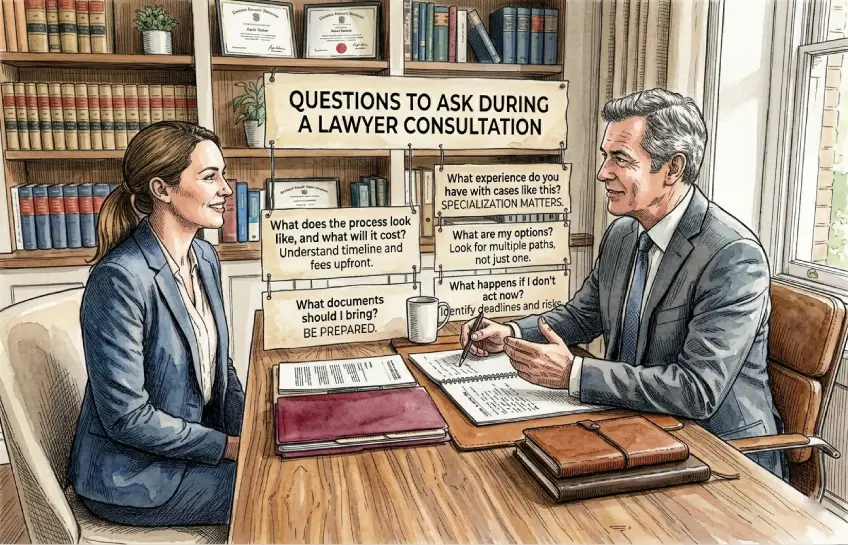
Walking into a consultation without any idea what to ask can make it feel overwhelming. These questions help make the most of the time:
- What experience do you have with cases like this? Specialization matters. A family law attorney isn’t the right fit for a business dispute.
- What are my options? A good attorney will lay out multiple paths, not just one.
- What does the process look like, and what will it cost? Understanding the timeline and the fees upfront avoids surprises.
- What documents should I bring? Coming prepared with the right paperwork makes consultations much more productive.
- What happens if I don’t act now? This helps identify whether there are deadlines or risks in waiting.
How to Choose the Right Lawyer for the Situation
Finding the right attorney means matching the legal issue to the right specialty. Family lawyers handle divorce and custody. Personal injury attorneys deal with accidents and insurance claims. Business attorneys handle contracts and corporate matters. Criminal defense lawyers focus on charges and criminal proceedings.
When comparing attorneys, it helps to look at their experience with similar cases, read reviews, and check their standing with the state bar association. During an initial consultation, it’s also worth paying attention to how well they explain things. A good attorney doesn’t talk down to clients — they make sure the person understands what’s going on.
There are red flags worth watching for: attorneys who guarantee outcomes, those who pressure someone into signing quickly, or those who are vague about fees. Free consultations are a great way to compare a few options before deciding.
Knowing When to Consult a Lawyer Is Half the Battle
Legal problems don’t usually announce themselves clearly. Often, they start as something that feels manageable — a dispute with a landlord, a confusing contract, a conversation with HR that didn’t go well. The instinct to handle things personally is natural, and sometimes it works. But when money, property, family, or freedom are involved, professional legal advice is rarely wasted.
The right time to consult a lawyer isn’t always when a situation has become a crisis. It’s often well before that — when the options are still open, the deadlines haven’t passed, and the situation can still be shaped. Waiting until things are urgent almost always makes them harder and more expensive to resolve.
If a situation feels legally complicated, or if the stakes are high enough that getting it wrong would cause real harm, reaching out to an attorney is the right next step. Most offer free consultations, and even one conversation can completely change how someone approaches a difficult situation.
Found this helpful? Share it with someone who might be dealing with a legal question they’ve been putting off — sometimes, knowing where to start is all they need.

Other Articles

History of Social Media: From Chat Rooms to TikTok
Best Free Online Courses That Are Actually Worth It in 2026

No Comment! Be the first one.