

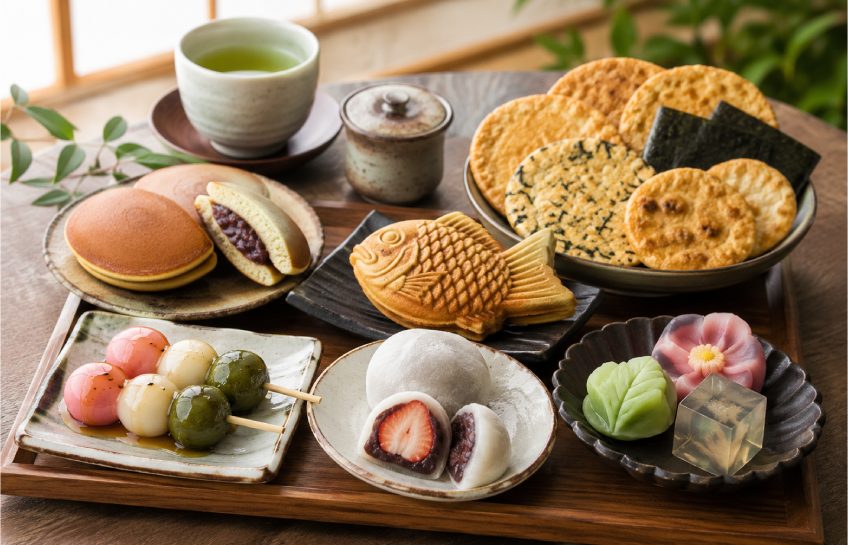
Introduction
Japanese snacks are much more than quick bites from a convenience store. They include traditional sweets, rice crackers, seasonal treats, regional specialties, and modern packaged foods. Some are soft and chewy, while others are crisp, sweet, salty, or filled with red bean paste.
For first-time visitors, the variety can feel a little confusing. Knowing the main types makes it easier to decide what to try. From wagashi, mochi, and dango to senbei and regional sweets, Japanese snacks offer a simple way to explore the country’s food culture.
What Are Japanese Snacks?
Japanese snacks include both traditional and modern foods eaten between meals. Traditional Japanese confectionery is often grouped under the term wagashi, while everyday snack culture also includes foods such as rice crackers and dagashi, a category of more casual confectionery.
A major feature of Japanese sweets is variety. Wagashi can be made by steaming, baking, molding, shaping bean paste, or working with rice-based ingredients. Many are designed around the changing seasons.
Traditional Japanese Snacks Worth Trying
Traditional Japanese snacks are strongly connected to ingredients, texture, seasonality, and presentation. Here are some of the best-known examples.
Mochi
Mochi is a soft, chewy rice-based sweet that plays an important role in Japanese confectionery. It can be colored for seasonal occasions and may be served in different forms. Some versions are filled with sweet red bean paste or other fillings.
Daifuku
Daifuku is a type of mochi with a filling inside. Sweet red bean paste, known as anko, is one of the classic fillings. Other varieties can use fruit or different creams.
Dango
Dango are chewy rice-flour dumplings usually served on skewers. They can be grilled and finished with a sweet or savory glaze. They are also associated with festivals and seasonal occasions.
Manju
Manju is a traditional confection made from dough with a sweet filling, commonly bean paste. MAFF includes manju among established Japanese confectionery varieties.
Yokan
Yokan is a dense sweet made in a molded form, commonly associated with azuki bean paste. It is another established type of wagashi.
Dorayaki
Dorayaki consists of small golden pancakes with a filling, traditionally anko. JNTO also notes that other fillings, including chestnut, fruit jam, chocolate, and green-tea cream, are found today.
Taiyaki
Taiyaki is a fish-shaped cake with a sweet filling. Anko is traditional, although other fillings are also popular. It is commonly found at festivals, parks, and around temples.
Japanese Rice Crackers and Savory Snacks
Japanese snacks are not all sweet. Senbei, or Japanese rice crackers, are an important savory category and come in different shapes and flavors. Soy sauce and seaweed are familiar examples, while regional varieties add even more diversity.
Senbei can also show how a snack connects with local food traditions. For example, MAFF documents ginger senbei from Kanazawa, commonly known as Shibafune. It has a light texture, a sweet coating, and a noticeable ginger flavor.
For travelers who prefer crunchy and less sweet snacks, senbei is an easy place to start.
Why Japanese Snacks Change With the Seasons
Seasonality is one of the most distinctive features of traditional Japanese confectionery. Wagashi can use seasonal ingredients, colors, shapes, and designs to reflect the time of year.
For example, sakuramochi is closely associated with spring. MAFF describes it as a pink rice cake filled with red bean paste and wrapped in a salted cherry blossom leaf. It is commonly sold during the spring season, roughly from February to early April.
MAFF also documents different seasonal confectionery throughout the year, including dango, yokan, ohagi, chestnut sweets, and other regional preparations.
This means trying Japanese snacks can be slightly different depending on when you visit.
Regional Japanese Snacks to Look For
Japan’s snack culture is also shaped by local specialties. Different regions have their own sweets and snack traditions, making food shopping part of the travel experience.
Examples documented by JNTO include:
| Region | Example |
|---|---|
| Saitama | Soka Senbei |
| Shizuoka | Unagi Pie |
| Osaka | Iwa Okoshi |
| Kyoto | Kyo-Gashi |
| Mie | Akafuku |
| Gifu | Kuri Kinton |
| Nagano | Oyaki |
These examples show why it can be useful to look for local specialties instead of buying the same snacks everywhere. JNTO maintains a regional food guide that includes Japanese sweets and other local foods across Japan.
Best Japanese Snacks for First-Time Visitors
There is no single snack that is best for everyone. A good first choice depends on what textures and flavors you already enjoy.
For a simple introduction, consider:
- Dorayaki if you like soft cakes and sweet fillings.
- Daifuku if you want something soft and chewy.
- Dango if you want a chewy snack served on a skewer.
- Taiyaki if you enjoy warm baked sweets.
- Senbei if you prefer something crisp and savory.
- Sakuramochi if you are visiting during its spring season.
Trying one soft sweet and one savory cracker is also an easy way to compare two very different sides of Japanese snack culture.
Japanese Snacks as Souvenirs
Packaged Japanese snacks can make practical souvenirs because many are easy to carry and are designed for gifting.
Traditional wagashi, however, are not always ideal for long trips. JNTO notes that many wagashi are best eaten fresh and may have a shelf life ranging from only a few days to a few weeks, depending on the variety.
Before buying a snack as a souvenir, check:
- Best-before or use-by dates
- Packaging
- Storage instructions
- Whether the product needs refrigeration
- How long you will be traveling
For a longer journey, shelf-stable packaged sweets or crackers are usually more practical than fresh confectionery.
Where Can You Buy Japanese Snacks?
Japanese snacks are available in many everyday shopping locations. Convenience stores and supermarkets are useful for accessible, everyday options, while specialty shops can offer more traditional or regional choices.
Department-store food floors, often called depachika, are another useful place to explore Japanese sweets and food gifts. Airports, train stations, shopping streets, and tourist areas can also be good places to find regional specialties and souvenirs.
A useful approach is to combine both types of shopping. Use convenience stores for casual discovery, then visit a specialty shop or department-store food floor when you want something more regional or gift-worthy.
Are Japanese Snacks Healthy?
Japanese snacks should not automatically be considered healthy simply because they contain ingredients such as rice, beans, fruit, or tea.
Like snacks anywhere else, their nutritional value varies. Sweet confectionery can contain significant amounts of sugar, while savory products may contain substantial sodium. Portion size and ingredients matter.
When nutrition is important to you, check the product label and consider the serving size instead of judging a snack by its name or traditional image alone.
How to Choose the Right Japanese Snack
The easiest way to choose is to start with your taste preferences.
Choose soft and chewy: Try mochi, daifuku, or dango.
Choose baked and sweet: Try dorayaki or taiyaki.
Choose crisp and savory: Try senbei.
Want something seasonal: Look for wagashi connected to the time of year.
Want a regional gift: Check local specialties in the area you are visiting.
This simple approach can make Japanese snack shopping much less overwhelming.
Frequently Asked Questions
What are Japanese snacks?
Japanese snacks include traditional sweets such as wagashi, mochi, dango, manju, and yokan, along with senbei, dagashi, and modern packaged snacks.
What is wagashi?
Wagashi is a broad term for traditional Japanese confectionery. Many varieties are linked to seasonality, Japanese culture, and tea traditions.
What is the difference between mochi and daifuku?
Mochi is a broader rice-based confection, while daifuku is a type of mochi that contains a filling, commonly sweet red bean paste.
What Japanese snack is good for a first-time visitor?
Dorayaki, daifuku, taiyaki, dango, and senbei are approachable starting points because they offer different textures and flavor profiles.
Are Japanese snacks sweet or savory?
Both. Japanese snack culture includes sweet wagashi and modern confectionery as well as savory options such as senbei rice crackers.
Are Japanese snacks good souvenirs?
Many packaged sweets and crackers can make convenient souvenirs. Fresh wagashi may have a short shelf life, so check storage and date information before traveling with them.
Where can you buy Japanese snacks?
You can find Japanese snacks at convenience stores, supermarkets, specialty shops, department-store food floors, shopping streets, stations, and airports.
Conclusion
Japanese snacks offer a simple way to experience the country’s food culture. Traditional sweets such as mochi, daifuku, dango, dorayaki, taiyaki, manju, and yokan show the variety of wagashi, while senbei highlights the savory side of Japanese snack food.
The best part is the variety. Snacks can change with the season, differ by region, and range from everyday treats to carefully made gifts. Whether you want something soft, crunchy, sweet, savory, traditional, or regional, there is plenty to explore.

Other Articles

Kitsune: The Japanese Fox Spirit Behind Centuries of Legend
How Muichiro Died: His Final Battle Explained

No Comment! Be the first one.