

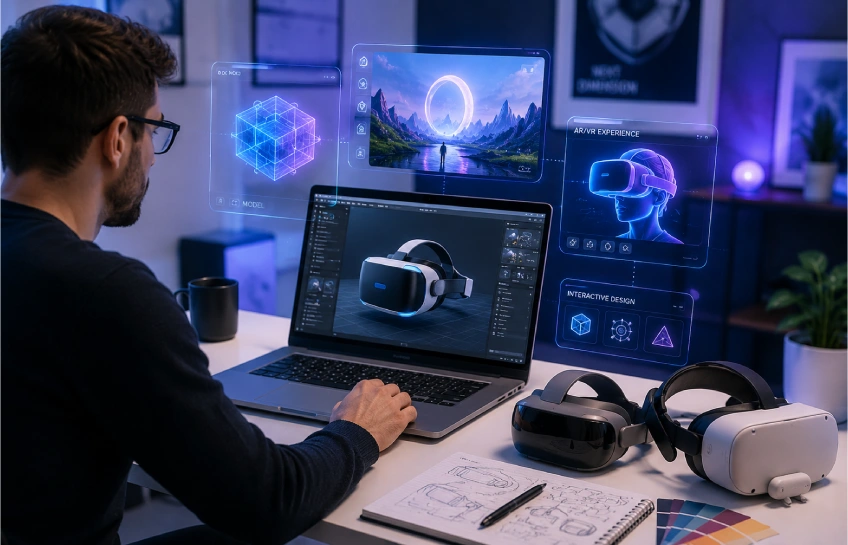
“GFXProjectality” is a newly coined term spreading across blogs in 2025 and 2026. No single, agreed definition exists yet. Most articles link it loosely to AI design tools, real-time rendering, and AR/VR. Readers should treat claims about it with caution until the term settles.
If someone searched for tech trends gfxprojectality and landed here, they probably found a dozen articles that all explain the word differently. That’s not a coincidence. It’s the real story.
This piece breaks down what the term actually means right now, where it came from, and what’s really going on with the tech ideas people are trying to attach to it.
What Does “GFXProjectality” Actually Mean?
Here’s the direct answer: there isn’t one fixed meaning yet.
Search around for tech trends gfxprojectality and every site gives a slightly different answer. One calls it a shift in how HR teams use immersive tools. Another says it’s about graphics merging with “projected digital realities.” A third describes it as an umbrella term for AI design software, real-time rendering, and AR or VR working together.
That’s a red flag for anyone who cares about facts. A real, established tech term usually has one clear definition that experts agree on, like “cloud computing” or “machine learning.” When ten articles each invent their own version of a word, it usually means the term is brand new, made up by a content site, or spreading through copycat blogs that repeat each other without checking the facts.
Where the Term Comes From
The word traces back to a small tech and design blog. From there, it spread to other sites that picked it up and wrote their own takes, each adding a new spin. Some articles connect it to human resources. Others link it to Photoshop workflows or “digital transformation.” A few even predict it will define 2026.
None of these claims point back to a real industry body, a research paper, or a well-known tech company. That matters. Big, real trends usually show up in places like Gartner reports, Adobe product pages, or coverage from major tech outlets. This one doesn’t.
So readers should treat “gfxprojectality” less like a fixed piece of technology and more like a label some writers are testing out. It might catch on. It might not. Right now, it’s still finding its feet.
The Real Tech Trends Hiding Behind the Buzzword
Even if the word itself is shaky, the ideas people attach to it are real and worth knowing about. Here’s what’s actually happening in tech right now, without the made-up label.
AI-Powered Design Tools
Design software has changed fast. Tools now suggest layouts, generate images from text, and clean up rough sketches in seconds. Designers use these tools to speed up early drafts, not to replace their own judgment. A junior designer today can turn out work that used to take much longer, because the software handles the repetitive parts.
This is a genuine shift. It shows up in tools like Adobe Firefly, Canva’s AI features, and countless plug-ins built for teams that need visuals fast.
Real-Time Rendering
Video games pushed this forward first. Real-time rendering means a computer builds a 3D scene instantly, instead of taking hours to process it frame by frame. Game engines like Unreal Engine now show up outside gaming too. Architects use them to walk clients through a building before it’s built. Car brands use them to show a vehicle in any color, any lighting, any angle, without a physical photo shoot.
This trend is well documented and easy to verify. It doesn’t need a made-up label to be interesting.
AR, VR, and Mixed Reality
Augmented reality and virtual reality keep finding new jobs outside gaming. Furniture apps let shoppers see a couch in their living room before buying it. Surgeons train on virtual patients before touching a real one. Pilots run through emergency drills in simulators that feel close to the real cockpit.
These tools save money, cut risk, and speed up training. That’s a solid, trackable trend, and it doesn’t need a buzzword to prove its value.
Why You Should Be Careful With This Term
A few reasons make “gfxprojectality” worth a second look before trusting anything written about it.
- No consistent definition. Every article says something different.
- No credible source. None of the coverage traces back to a known company, research group, or expert.
- Copycat pattern. Several sites use nearly identical phrasing, which suggests one piece got copied and reworded rather than independently researched.
- Vague, filler-heavy writing. Phrases like “unlocking new possibilities” or “reshaping the future” show up again and again, without real examples or data behind them.
None of this means the underlying tech ideas are fake. AI design tools, real-time rendering, and AR/VR are all real and growing fast. It just means the specific word “gfxprojectality” hasn’t earned trust as an actual industry term yet.
How to Spot AI-Generated Buzzwords Like This One
This isn’t the first made-up term to spread across blogs, and it won’t be the last. Readers can protect themselves by watching for a few warning signs:
- The word doesn’t appear in dictionaries, major news outlets, or trade publications.
- Different articles define it in different ways.
- The writing is heavy on vague claims and light on specific facts, numbers, or named sources.
- A cluster of small, similar-looking sites all publish near-identical articles about the same word within a short time frame.
- The term gets tied to unrelated fields (HR, real estate, Photoshop) in ways that feel forced.
Anyone doing research for work, school, or a business decision should treat a term like this with caution until it shows up in a source they trust.
Should You Use “GFXProjectality” in Your Own Content?
Businesses and writers sometimes ask if they should jump on a trending word like this one, especially if it’s getting search traffic. The honest answer depends on the goal.
If the goal is quick traffic from curious searchers, writing about the term itself, and explaining that it’s an unverified buzzword, can work well. That’s exactly what this article does.
If the goal is to sound like an expert or build long-term trust with an audience, it’s safer to talk about the real trends behind the word (AI design tools, real-time rendering, AR/VR) using language that’s actually recognized in the industry. That keeps the content accurate and easy to defend if anyone checks the facts.
Either way, no one should present “gfxprojectality” as an established, agreed-upon term. That would risk passing along made-up information as fact.
The Bottom Line on Tech Trends GFXProjectality
The phrase tech trends gfxprojectality is spreading fast online, but it doesn’t yet point to one clear, agreed idea. It looks like a newly invented label that a handful of sites picked up and defined in their own ways. The technology it gets linked to, like AI design software, real-time rendering, and AR/VR, is real and worth paying attention to. The label itself just isn’t proven yet.
Anyone researching this topic should focus on the actual trends behind the word, check sources carefully, and stay skeptical of any article that claims to have “the” definition when ten other articles disagree.
FAQs About Tech Trends GFXProjectality
1. Is “gfxprojectality” a real, official tech industry term? Not yet. No major tech company, research firm, or news outlet uses it as an established term. It appears mainly on a small group of blogs with differing definitions.
2. Who came up with the word “gfxprojectality”? It traces back to a small tech and design blog. Other sites picked it up afterward and wrote their own versions of what it means.
3. Does “gfxprojectality” relate to real technology? The ideas linked to it, like AI design tools, real-time rendering, and AR/VR, are real and growing. The specific label attached to them is not an established term.
4. Why do different websites define “gfxprojectality” differently? This usually happens when a made-up word spreads across content sites before anyone agrees on a meaning. Each writer fills in the gap with their own guess.
5. Is it safe to use “gfxprojectality” in a business report or presentation? It’s risky. Using an unverified term in a formal setting can make the content look less credible. Sticking to recognized terms like “AI-powered design” or “real-time rendering” is safer.
6. What technologies get grouped under “gfxprojectality”? Most articles link it to AI design software, real-time 3D rendering, and immersive tech like AR, VR, and mixed reality.
7. How can readers tell if a tech term is trustworthy? Look for a consistent definition across multiple credible sources, backing from known companies or researchers, and specific examples rather than vague claims.
8. Will “gfxprojectality” become a standard tech term in the future? That’s impossible to say for certain. Some invented terms catch on over time. Many fade away once search interest drops. Right now, it’s too early to tell.
9. What should someone do if they need accurate info about AI design and immersive tech trends? Check sources like major tech news outlets, official product pages from companies like Adobe or Unreal Engine, or research reports from firms like Gartner, rather than sites built around a single unverified buzzword.
Anyone building a content strategy around fast-moving tech topics should keep checking new terms this way before publishing. Readers who want more breakdowns like this one can check back for future updates on emerging tech language and what’s actually behind it.

Other Articles


No Comment! Be the first one.