

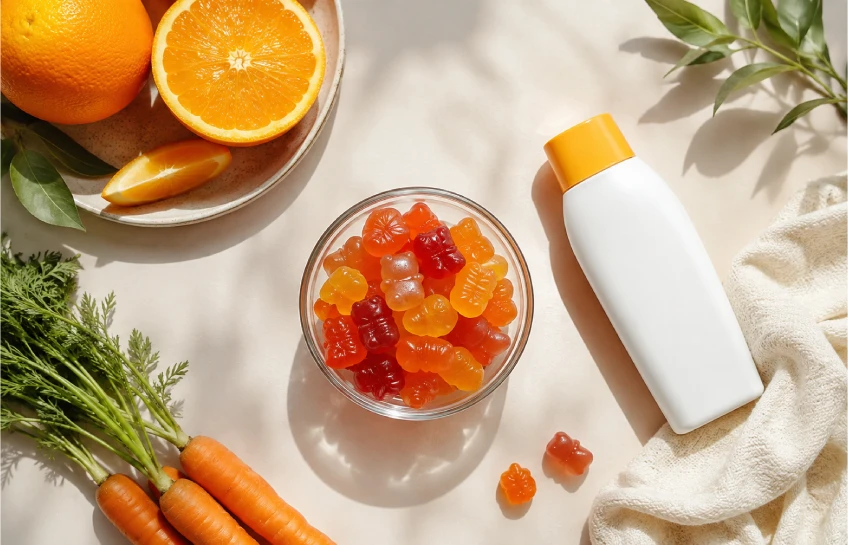
You’ve probably seen the videos. Someone pops a gummy, and a few clips later, they’re glowing like they just got back from a beach trip. No sun. No tanning bed. Just a chewy vitamin.
It’s easy to get curious, especially if you’re pale before a big event, tired of streaky self-tanner, or just scared of what tanning beds do to your skin. So the question is simple: do tanning gummies actually work, or is this another viral product that overpromises?
Here’s the short answer. Tanning gummies can give you a warm, golden tint over several weeks. But they don’t tan your skin the way the sun does, and they are not a sunscreen replacement. Let’s break down exactly what’s going on, so you can decide if they’re worth trying.
What Tanning Gummies Actually Do
Tanning gummies work through pigments called carotenoids, mainly beta-carotene, astaxanthin, and lycopene. These are the same natural pigments that give carrots, tomatoes, and certain algae their color.
When you eat them daily, they build up in the fatty layer just under your skin. Over time, that creates a soft golden or peachy tint. It’s a real color change, but it’s not a tan in the medical sense.
A true tan happens when UV light triggers your skin to make more melanin, the pigment that also helps protect deeper skin layers. Carotenoids don’t do that. They just sit under the skin and reflect a warmer tone. Think of it less like a summer tan and more like “I’ve been eating a lot of vegetables and sleeping well” color.
The Marketing Claims You Should Question
A lot of gummy brands lean on big promises. Two of them deserve a closer look.
“Instant tan in a gummy.” Carotenoids need weeks to build up in the skin, not hours or days. If a brand promises an overnight change, that claim doesn’t match how the ingredient actually works.
“Safe replacement for sunscreen.” This one matters more, because it can lead to real sunburn. Carotenoids have some antioxidant activity, but that is nowhere near the protection an SPF product gives your skin. Skipping sunscreen because you took a gummy is a genuinely risky habit.
The Tanning Gummies Decision System
Instead of guessing whether tanning gummies are right for you, run through these four checks.
Step 1: Check your goal. If you want a subtle, warm glow, gummies can help. If you want a deep, beach-level tan, they won’t get you there. Set that expectation first.
Step 2: Check your health status. This step matters the most. Research on high-dose beta-carotene supplements has linked them to a higher risk of lung cancer in smokers and people with a history of heavy asbestos exposure. Large trials, including the ATBC and CARET studies, found this pattern specifically in smokers taking concentrated beta-carotene supplements, not in people eating carotenoid-rich food. If you smoke, are pregnant, or take regular medication, talk to a doctor before starting any carotenoid supplement.
Step 3: Check the label. A trustworthy product lists exact carotenoid amounts, usually in the range of 4 to 8 mg of beta-carotene per serving. Be cautious of labels that promise huge doses or vague “proprietary blends” with no numbers. If the gummy is clear or pale, be skeptical too. Carotenoids are naturally colored, so a real dose should show up as color in the gummy itself.
Step 4: Pair it with sun-safe habits. Gummies are not protection. Daily SPF is still non-negotiable, tan or no tan.
What Results Actually Look Like
Most people don’t see anything for the first one to two weeks. The color usually starts showing between weeks three and five, and builds further over a couple of months of consistent use. The result tends to be a mild, even warmth, not a dramatic shift.
If you stop taking them, the tint fades gradually as the carotenoids clear from your system, over several weeks.
Common Traps to Avoid
- Believing the before-and-after photos. Many viral posts use filters, lighting, or self-tanner underneath.
- Skipping sunscreen because “the gummies have it covered.” They don’t.
- Overdoing the dose. Taking more gummies than directed won’t speed up results. It just raises your carotenoid intake for no extra benefit, and in rare cases of very high, sustained intake, can cause a temporary orange-yellow tint to the skin, especially on palms and soles. This is called carotenemia. It isn’t dangerous on its own, but it isn’t the goal either.
- Ignoring warning signs. New skin changes, nausea, or unusual symptoms after starting a supplement are reasons to stop and check with a doctor, not push through.
Small Habits That Support a Healthy Glow
- Eat carotenoid-rich foods like carrots, sweet potatoes, and tomatoes alongside or instead of a supplement.
- Use a broad-spectrum SPF every day, not just at the beach.
- Moisturize regularly. Hydrated skin shows off any tone, gummy-induced or not, more evenly.
- Give the process time. Consistency matters more than the dose.
If Supplements Aren’t For You
Not everyone wants to add another pill or gummy to their routine, and that’s fair. Topical self-tanners using DHA (dihydroxyacetone) give a faster, more visible tan without any ingestion at all. They also wash off eventually instead of needing weeks to fade. The trade-off is the risk of streaks or a patchy finish if applied unevenly, so exfoliating first and using a tanning mitt helps a lot.
Frequently Asked Questions
Do tanning gummies work without sun exposure? Yes, in the sense that the tint comes from the carotenoids themselves, not from UV exposure. You don’t need to be in the sun for the color to develop.
Are tanning gummies safe for smokers? Current research says high-dose beta-carotene supplements carry added lung cancer risk for smokers. If you smoke, it’s best to skip carotenoid supplements and check with a doctor about alternatives.
Can tanning gummies replace sunscreen? No. They offer no meaningful UV protection. SPF is still necessary every time you’re in the sun.
How long do the results last? The tint builds over three to five weeks and fades gradually over several weeks once you stop taking them.
Will my skin turn orange? Only with excessive, sustained overdosing well beyond the directed amount. Following label dosing is very unlikely to cause this.
The Bottom Line
Tanning gummies aren’t a scam, but they aren’t magic either. They can give you a soft, believable warmth over several weeks if you’re consistent and choose a transparent, reasonably dosed product. They can’t replace real sun protection, and they’re not the right choice if you smoke or have other health flags without a doctor’s input first.
If a subtle glow sounds like enough, and you’re comfortable with the wait, they’re worth trying. If you want fast, dramatic color, a topical self-tanner will get you there faster and with fewer questions about supplement safety.
For a closer look at how dermatologists evaluate carotenoid supplements and lung cancer risk in smokers, this beta carotene and lung cancer overview is a useful, medically reviewed resource: https://www.medicalnewstoday.com/articles/beta-carotene-and-lung-cancer

Other Articles

Lazy Sunday: How to Use One Day to Reset Your Mind and Week

No Comment! Be the first one.