

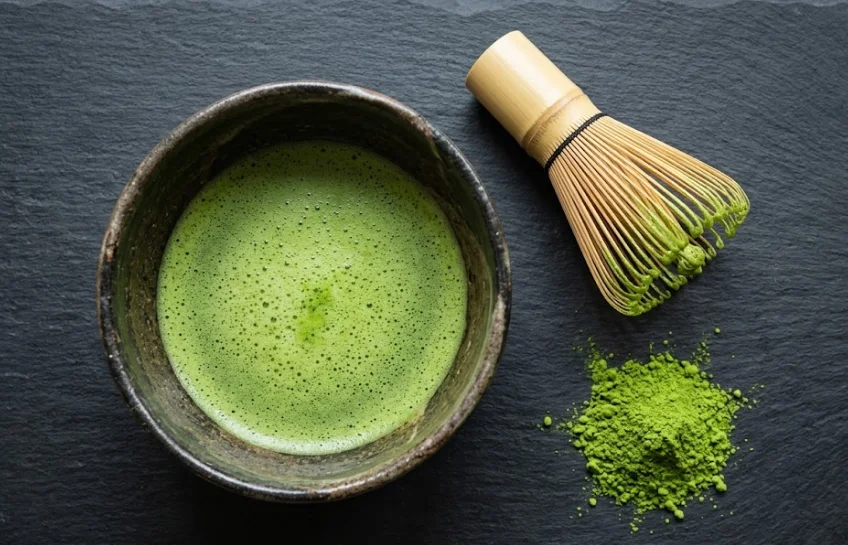
If you’ve been wondering what does matcha taste like, here’s the straightforward answer: grassy, mildly sweet, savory, and lightly bitter — all at the same time. It’s a flavor combination that catches first-timers off guard. This article covers the full picture, from the core taste notes and texture to how grades, preparation, and add-ins change things.
What Does Matcha Taste Like?
Matcha is finely ground powder made from shade-grown green tea leaves. That shading process is what separates it from regular green tea — the leaves accumulate more chlorophyll and amino acids before harvest, which directly shapes the flavor.
The taste lands somewhere between earthy and smooth. You get a vegetal, green note up front, followed by a soft natural sweetness and a savory depth that lingers. That savory quality is called umami — the same rich, brothy sensation you’d find in a bowl of miso soup. It rounds out the bitterness and keeps the overall flavor from feeling sharp or one-dimensional.
Good matcha also has a creamy finish. It doesn’t taste thin or watery. When prepared properly, it has real body — almost like a thicker, more concentrated version of green tea.
Key Flavor Notes
Matcha’s taste is built from a few distinct notes that hit at different points. Here’s a simple breakdown:
| Flavor Note | What It Feels Like |
|---|---|
| Vegetal/Grassy | Fresh green leaves, spinach-like |
| Umami | Savory, slightly brothy |
| Sweetness | Subtle and natural — not sugary |
| Bitterness | Mild in quality matcha, sharper in lower grades |
| Aftertaste | Nutty, faintly floral, or lightly bittersweet |
The aftertaste is one of the more interesting parts. It lingers gently rather than cutting off immediately, which is a big part of what makes matcha feel satisfying.
How Does Matcha Texture Feel?
Taste alone doesn’t tell the whole story — texture matters too. Properly whisked matcha has a smooth, almost velvety body. Because you’re consuming the whole leaf in powder form rather than a steeped infusion, the tiny suspended particles create a full, thick mouthfeel.
If your matcha feels gritty or thin, something went wrong in preparation. Clumps from skipping the sift, water that’s too hot, or not enough whisking can all make it taste harsh and feel rough. The gap between well-made and poorly-made matcha is pretty noticeable once you’ve had both.
Does Matcha Taste Bitter?
This is one of the most common questions, and the honest answer is: it depends. High-quality matcha should only be mildly bitter. That bitterness is balanced by natural sweetness and umami, so it doesn’t take over the cup.
When matcha tastes harsh or overwhelmingly bitter, it’s usually traceable to one of these:
- Low-quality or old powder
- Water that’s too hot (above 80°C)
- Too much powder per cup
- Not enough whisking
Ceremonial-grade matcha prepared with water around 70–80°C rarely tastes sharp. The bitterness stays in the background and actually complements the other flavors.
How Does Matcha Compare to Regular Green Tea?
Regular green tea steeps the leaves in water, then discards them. Matcha uses the whole leaf, ground into powder and consumed entirely. That makes a major difference in flavor intensity.
Green tea is lighter, more diluted, and gentler on the palate. Matcha is richer, deeper, and more concentrated. The umami is stronger, the vegetal notes are more present, and the body is noticeably thicker.
| Matcha | Regular Green Tea | |
|---|---|---|
| Flavor Depth | Rich and layered | Lighter, simpler |
| Umami | Strong | Mild |
| Body | Thick, creamy | Thin |
| Bitterness | Mild (if quality is good) | Low |
How Do Different Matcha Grades Taste?
Not all matcha tastes the same. The grade plays a direct role in what you get.
Ceremonial grade is the smoothest and most balanced. It has strong umami, natural sweetness, and very little bitterness. This is what you’d drink plain, whisked with water alone.
Premium grade sits in the middle — balanced sweetness and umami, with slightly grassier notes and a hint of bitterness. It works well both as plain matcha and in lattes.
Culinary grade is stronger, grassier, and more bitter. It’s not great for drinking straight, but it’s perfectly fine in baked goods, lattes, or recipes where other ingredients do some of the balancing.
What Factors Change Matcha’s Taste?
Even with the same matcha powder, small changes shift the flavor significantly. Water temperature is one of the biggest — anything above 80°C tends to pull out more bitterness. The powder-to-water ratio matters too. Too much powder makes it intense; too little makes it thin.
Storage affects taste more than people realize. Old or poorly stored matcha loses its freshness and can taste flat or harsh. Fresh matcha has a clean, vibrant green flavor. If yours smells dull or faintly musty, it’s probably past its best. Origin and leaf quality also play a role — Japanese matcha from Uji or Nishio tends to have a cleaner, more refined flavor than budget alternatives.
How Do Matcha Lattes and Sweets Taste?
Adding milk changes the experience quite a bit. Dairy or oat milk softens the bitterness, adds creaminess, and brings out the sweetness. A matcha latte ends up tasting nutty, green, and gently sweet — much more approachable than plain matcha for most people.
In desserts, matcha’s earthy notes pair well with sugar and fat. Matcha ice cream, cookies, and cakes tend to deliver a lightly earthy sweetness where the grassiness blends into the background rather than standing out.
How Can You Make Matcha Taste Better?
A few simple changes can make a real difference:
- Use water around 70–80°C, not boiling
- Sift the powder before whisking to avoid clumps
- Whisk in a W or M motion until the surface is frothy
- Start with a smaller amount of powder and adjust from there
- Try it plain at least once before adding milk or sweeteners
That last point matters. Tasting matcha straight gives you a proper baseline so you actually know what you’re working with before you start tweaking.
Who Might Enjoy Matcha’s Flavor?
If you already enjoy green tea, dark leafy greens, or drinks with a hint of bitterness, there’s a good chance matcha will work for you. The flavor suits people who appreciate complexity — something that’s sweet and savory at the same time, rather than one-note.
Beginners often do better starting with a matcha latte rather than going straight to a plain whisked cup. It’s a gentler introduction, and you can adjust the sweetness until you find your spot. Plain matcha becomes a lot easier to appreciate once you’ve built that familiarity.
Conclusion
So what does matcha taste like? It’s grassy, naturally sweet, savory, and mildly bitter — with a smooth, creamy texture that makes it feel genuinely satisfying. The flavor shifts depending on grade, preparation, and what you pair it with.
Try a few different preparations before deciding if it’s for you. Ceremonial-grade plain matcha and a simple oat milk matcha latte are two very different experiences, and most people find they like one more than the other.

Other Articles

Who Is Jeffrey Brezovar? All About Milo Manheim’s Dad
zoechip — Free Streaming, No Sign-Up Needed

No Comment! Be the first one.