

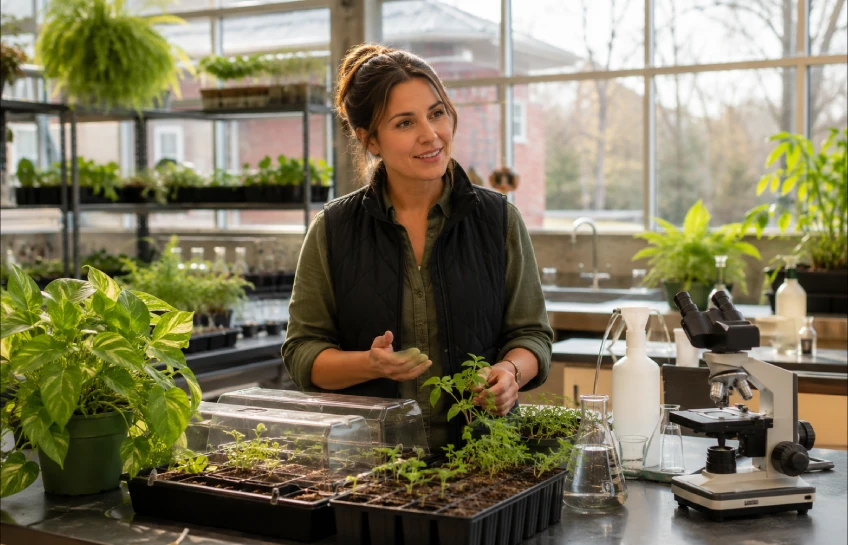
Katy Davis of Suffield, CT is an agriscience educator at the Suffield Regional Agriscience Center, a program housed within Suffield High School. This article covers her educational background, teaching role, classroom style, and professional experience outside school hours. If you’re curious about who she is, what she teaches, or why agriscience programs matter in Connecticut communities, you’ll find a clear and complete picture here.
Who Is Katy Davis of Suffield, CT?
Katy Davis is an agriscience teacher based in Suffield, Connecticut, working at the Suffield Regional Agriscience Center inside Suffield High School. Her teaching combines formal science instruction with practical, lab-based, and field-based learning — something she built through years of hands-on agricultural experience before stepping into a classroom.
She grew up in central Connecticut and shaped her foundation in agriculture through youth programs and community involvement. That background guided her academic choices and eventually led to a career focused on preparing high school students for agriculture-related coursework and careers.
Educational Background and Training
Davis earned a Bachelor of Science in Agriculture and Natural Resources from the University of Connecticut, through the College of Agriculture, Health, and Natural Resources. Her coursework covered animal science, plant science, and agricultural systems — all subjects she now teaches at the secondary level.
During her time at UConn, she was chosen for the university’s dairy farm crew, an opportunity available to only a small number of students. She worked on the farm year-round, gaining real experience in livestock management and daily farm operations. But beyond the practical skills, that role also confirmed her interest in teaching agriculture to others. She’s since expressed plans to pursue a master’s degree in agricultural education, showing a clear intention to keep developing professionally.
Teaching Role at Suffield Regional Agriscience Center
The Suffield Regional Agriscience Center operates as a specialized program within Suffield High School, open to students from Suffield and nearby districts. It’s designed for students who want focused, science-based coursework in agriculture, environmental studies, and related fields — the kind of depth a standard high school curriculum rarely offers.
As an agriscience teacher there, Davis teaches across multiple subject areas, supervises student projects, and contributes to curriculum planning. Her role goes well beyond daily instruction. She works alongside fellow educators to maintain a consistent program and takes part in school-level decisions about how agriscience education is structured and delivered.
What Subjects Does She Teach?
Davis covers three core areas of agricultural science: plant science, animal science, and agricultural biotechnology. Each subject blends classroom theory with hands-on practice, so students aren’t just reading about topics — they’re working through them in labs and field settings.
| Subject Area | Example Topics |
|---|---|
| Plant Science | Crop production, soil health basics |
| Animal Science | Livestock care, basic animal nutrition |
| Agricultural Biotechnology | Lab skills, genetics fundamentals |
She also supports students involved in Future Farmers of America (FFA), helping them build technical knowledge alongside skills like communication, problem-solving, and leadership. FFA activities give students a chance to apply what they’ve learned to real agricultural challenges outside the classroom.
Hands-On Learning and Classroom Approach
Davis’s teaching style is firmly rooted in learning by doing. Rather than keeping instruction limited to lectures, she integrates lab work, fieldwork, and project-based activities into her courses. Students put scientific concepts to use directly — which builds both understanding and confidence.
This approach reflects a broader truth in agriscience education: students retain more when they connect what they’re learning to concrete, real-world tasks. For a subject where theory and practice are closely tied, it makes a lot of sense. Students leave her classes with a working knowledge of agricultural science, not just a surface familiarity with the terminology.
Professional Experience Beyond the Classroom
Davis has built meaningful experience outside school hours as well. As a 4-H alumna, she stayed involved with the organization through her college years. In 2017, she was chosen as one of only twelve Connecticut 4-H college students to attend a National Agriculture Day leadership program in Washington, D.C. — a selective event focused on agricultural policy and advocacy at the national level.
She’s also contributed to public outreach through UConn Extension, where she wrote educational material on emergency preparedness aimed at Connecticut families and agricultural communities. It’s a different kind of work from teaching, but it draws on the same ability to explain technical information clearly to a general audience — a skill that shows up in how she runs her classes today.
Student Benefits of Agriscience Education
Students who go through agriscience programs like Davis’s develop a practical set of skills that apply across a wide range of career paths and academic directions. Here’s what these programs typically help students build:
- Scientific reasoning and research skills
- Hands-on experience with farming, animal care, and lab techniques
- Leadership development through FFA and youth agricultural programs
- Exposure to sustainability and environmental science
- Early preparation for college-level study in agriculture or natural resources
For students in Suffield and surrounding towns, the regional center provides access to this kind of specialized instruction without needing to look elsewhere. That’s a meaningful advantage for students who’ve already decided agriculture is the direction they want to pursue.
Community and Regional Connections in Agriscience
Agriscience programs work best when they stay connected to the wider community, and Davis’s professional background reflects that. Her work with 4-H and UConn Extension brings outside resources and perspectives into what her students experience at school. These connections are a practical way of grounding classroom learning in how agriculture actually operates.
Her program has also grown in scope in recent years. Curriculum committee records from late 2024 show she was working toward certification to teach a UConn Early College Experience course in Plant Breeding and Biotechnology, which would allow Suffield students to earn college credit while still enrolled in high school. And in June 2025, Suffield Board of Education minutes confirmed she presented the educational plan for a student field trip to Iceland, structured around geology, renewable energy, and agricultural systems — a clear example of connecting global learning to local curriculum goals.
Why Is Agriscience Important in Suffield, CT?
Regional agriscience centers like Suffield’s give students something most standard high school programs can’t: dedicated, science-based instruction in soil science, animal management, crop systems, and biotechnology. For communities in Connecticut where agriculture remains part of the local landscape and economy, that kind of education carries real weight.
Students who complete these programs are better prepared for college coursework in agriculture, environmental science, and related fields. And for those planning to work in farming or food production, early exposure to the technical side of modern agriculture gives them a clear head start. Regional centers also serve students from multiple districts, which means more young people get access to career-focused agricultural education.
Conclusion
Katy Davis of Suffield, CT has built a teaching practice grounded in genuine agricultural experience. From her time on UConn’s dairy farm crew to her national 4-H leadership work and her current role at the Suffield Regional Agriscience Center, she brings a range of real-world knowledge into the classroom. Her courses in plant science, animal science, and biotechnology give students a structured, hands-on introduction to agricultural education — one that prepares them for both further study and practical work in the field.



No Comment! Be the first one.