

You wake up, and your lower back already hurts. Before your feet even hit the floor.
That’s not just bad luck — it’s often a mattress problem. If your bed isn’t giving your spine the support it needs, your muscles work overtime all night trying to compensate. You wake up stiff, tired, and sore, even after a full eight hours.
The good news? The right mattress can genuinely change this. And in 2026, hybrid mattresses are still the most reliable option for back pain relief — for most people, most sleep positions, and most body types.
Here’s everything you need to know, plus five picks worth your attention.
Why Hybrid Mattresses Work Well for Back Pain
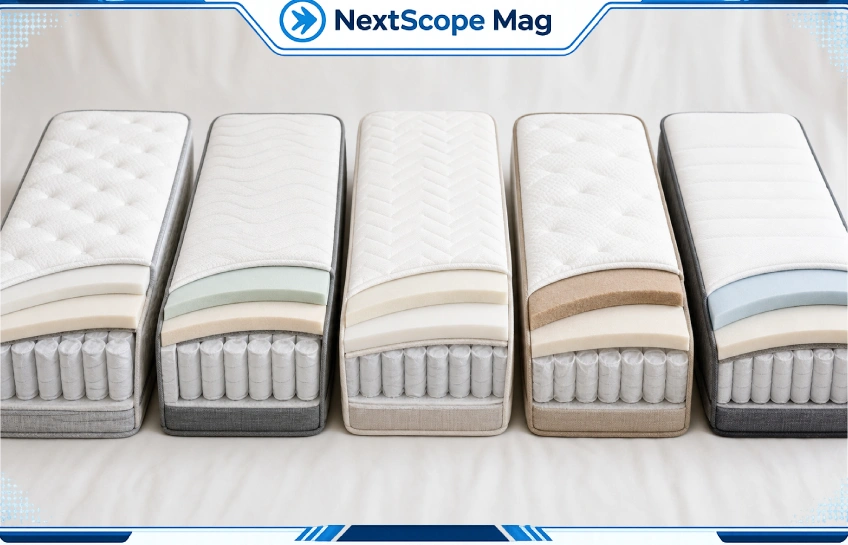
A hybrid mattress combines a coil support system with foam or latex comfort layers on top. That combination matters more than it sounds.
The coils give your spine real pushback. They prevent the kind of deep sinking that throws your hips out of line. The foam on top cushions pressure points — your shoulders, hips, and knees — without letting you collapse into the bed.
All-foam mattresses can feel too soft for back pain sufferers, especially if you’re heavier or sleep on your back. Innerspring mattresses often feel too firm and don’t relieve pressure. Hybrids land in the middle, which is exactly where most back pain sleepers need to be.
What Actually Matters for Back Pain Relief
Before comparing mattresses, it helps to know what to look for.
Spinal alignment is the big one. Your spine has a natural curve. A good mattress supports that curve rather than flattening it or exaggerating it. If your hips sink too far, your lower back arches. If the mattress is too hard, your spine stays rigid all night.
Pressure relief matters mainly at your hips and shoulders. Those are the spots that bear the most weight. Without enough cushioning there, you’ll wake up with pain in the wrong places.
Firmness is personal, but there are general patterns. Back sleepers usually do best on a medium-firm mattress. Side sleepers need something a bit softer to relieve shoulder and hip pressure. Stomach sleepers — though it’s not great for your back — need firmer support to keep the pelvis from dropping.
Edge support matters too, especially if you share a bed or sit on the edge to put your shoes on. Weak edges shrink your usable sleep surface and can mess with your alignment near the sides.
The Top 5 Hybrid Mattresses for Back Pain in 2026
1. Saatva Classic — Best Overall for Back Pain
The Saatva Classic is a dual-coil hybrid with a Euro pillow top. It comes in three firmness options: Plush Soft, Luxury Firm, and Firm. For back pain, the Luxury Firm is the sweet spot for most people.
What makes it stand out is the lumbar zone enhancement — a targeted support layer in the middle third of the mattress where your lower back rests. That’s not a marketing gimmick; it’s genuinely useful if you deal with chronic lower back pain.
It sleeps cool, has excellent edge support, and holds up well over time. It’s also one of the few luxury hybrids that delivers on its price.
Best for: Back sleepers, combo sleepers, people with chronic lower back pain, those who prefer a traditional mattress feel.
2. WinkBed — Best for Heavier Sleepers with Back Pain
The WinkBed comes in four firmness levels, including a “Plus” version made specifically for people over 230 lbs. That alone makes it worth mentioning.
Heavier sleepers often sink straight through softer mattresses and lose all spinal support. The WinkBed Plus uses a firmer coil system and reinforced foam that holds its shape under more weight. If you’ve tried mattresses that felt fine in-store but collapsed at home within months, this is the kind of build that avoids that.
The back support here is solid. It won’t let your hips sag, and the lumbar area feels well-cushioned without being mushy.
Best for: Heavier sleepers, back sleepers, people who’ve had issues with mattresses losing shape quickly.
3. Helix Midnight Luxe — Best for Side Sleepers with Back Pain
Side sleeping and back pain don’t always mix well. You need pressure relief at the shoulder and hip, but you also need your spine to stay straight from head to tailbone. That’s a narrow target.
The Helix Midnight Luxe hits it well. It has zoned lumbar support built into the coil layer — firmer under the hips and lower back, softer under the shoulders. That prevents the hip-drop that causes a lot of side sleeper back pain.
It’s a medium feel overall, which works for most side sleepers. The pillow top adds enough cushion without going so soft that your alignment suffers.
Best for: Side sleepers, people with hip pain alongside back pain, lighter to average-weight sleepers.
4. DreamCloud Premier — Best for Budget-Conscious Buyers
The DreamCloud Premier is a cashmere-blend hybrid that punches above its price point. It’s a medium-firm mattress with a quilted top that feels noticeably more premium than what you’d expect at this price.
For back pain, it does the basics well. The coil system keeps the hips supported, and the foam layers absorb enough pressure that you don’t wake up sore at the contact points. It’s not as specialized as the Saatva or WinkBed, but for someone who wants a solid hybrid without spending $2,000+, it’s a reliable choice.
It also comes with a 365-night trial, which is one of the longest in the industry. That matters when you’re buying for back pain — you need real time to feel the difference.
Best for: Budget-conscious buyers, combo sleepers, those new to hybrid mattresses.
5. Bear Elite Hybrid — Best for Active People and Athletes
If you’re physically active — whether that means running, lifting, or just a physically demanding job — your back takes more wear than average. The Bear Elite Hybrid is built with that in mind.
It uses a copper-infused foam layer that draws heat away from the body, plus a coil system that responds quickly to movement. The zoned support helps with spinal alignment, and the firmer options work well for back and stomach sleepers who need more pushback.
It sleeps noticeably cool, which is worth flagging if you tend to overheat at night. Heat disrupts sleep, and disrupted sleep makes pain feel worse the next morning.
Best for: Active people, hot sleepers, back and stomach sleepers, those with muscle soreness alongside back pain.
Sleep Position Guide
Back sleepers need medium-firm support. Your lower back should feel gently cradled, not unsupported. Saatva Classic (Luxury Firm) or WinkBed are strong picks here.
Side sleepers need softer cushioning at the shoulder and hip while keeping the spine aligned. Helix Midnight Luxe handles this the best of the five.
Stomach sleepers need a firmer mattress to prevent the pelvis from dropping and the lower back from arching. Bear Elite Hybrid (Firm option) or WinkBed work here.
Combo sleepers who move around a lot need a mattress that’s responsive — one that adjusts quickly as you shift positions. DreamCloud Premier and Saatva Classic both do this well.
Common Mistakes When Buying for Back Pain
Choosing based on softness alone. Soft feels comfortable in the store, but it doesn’t mean your spine is supported. Many people buy soft mattresses hoping for pain relief and end up worse off.
Ignoring your body weight. A medium-firm mattress feels different at 150 lbs versus 250 lbs. Always factor in your weight when checking firmness recommendations.
Skipping the trial period. Back pain response takes weeks, not days. Don’t buy a mattress without at least a 90-night sleep trial.
Forgetting the foundation. A great mattress on a sagging box spring is still a bad setup. Your base matters.
Quick Buying Checklist
- Does it come in the firmness level that matches your sleep position?
- Does it have a zoned or targeted lumbar support feature?
- Is the trial period at least 90 nights?
- Does the return policy cover full refunds, not just exchanges?
- Is it rated well specifically by back pain sleepers, not just general buyers?
- Does the firmness match your body weight?
FAQs
How firm should a mattress be for back pain? Medium-firm works for most people. It keeps the spine in line without putting too much pressure on the hips and shoulders. That said, side sleepers often need medium, and stomach sleepers usually need firm.
Can a mattress actually reduce back pain? Yes — though it’s not a medical treatment. A mattress that supports spinal alignment and reduces pressure points can significantly cut down on morning stiffness and soreness. According to the American Chiropractic Association, sleep surface quality is one of the common contributors to back pain.
How long does it take to feel a difference with a new mattress? Give it at least 30 days. Your body needs time to adjust. Some people feel better within a week; others need a full month.
What if I share a bed and we have different firmness preferences? Look for mattresses that offer split firmness options, or consider a zoned hybrid with a medium-firm feel — it tends to work for more body types than any extreme on either end.
Are expensive mattresses always better for back pain? Not necessarily. Price matters up to a point, but what matters more is the construction. A $1,200 hybrid with proper zoned support can outperform a $3,000 mattress that’s just marketed well.
Making the Final Call
Back pain is exhausting. It’s not just physical — it affects your mood, your focus, and your ability to get through the day.
You don’t need a perfect mattress. You need the right one for your body, your sleep position, and your budget. If you’re a back sleeper with chronic lower back pain, start with the Saatva Classic. If you’re a heavier sleeper, look at the WinkBed Plus. Side sleepers should seriously consider the Helix Midnight Luxe.
Take the trial period seriously. Sleep on it for 30 to 60 nights before making a judgment. And if it’s clearly not working after that, use the return policy — that’s what it’s there for.
Your back will tell you what it needs. A good mattress just listens.



No Comment! Be the first one.